Why You Wake Up After 4 Hours of Sleep: Cortisol, Stress, and What Actually Helps
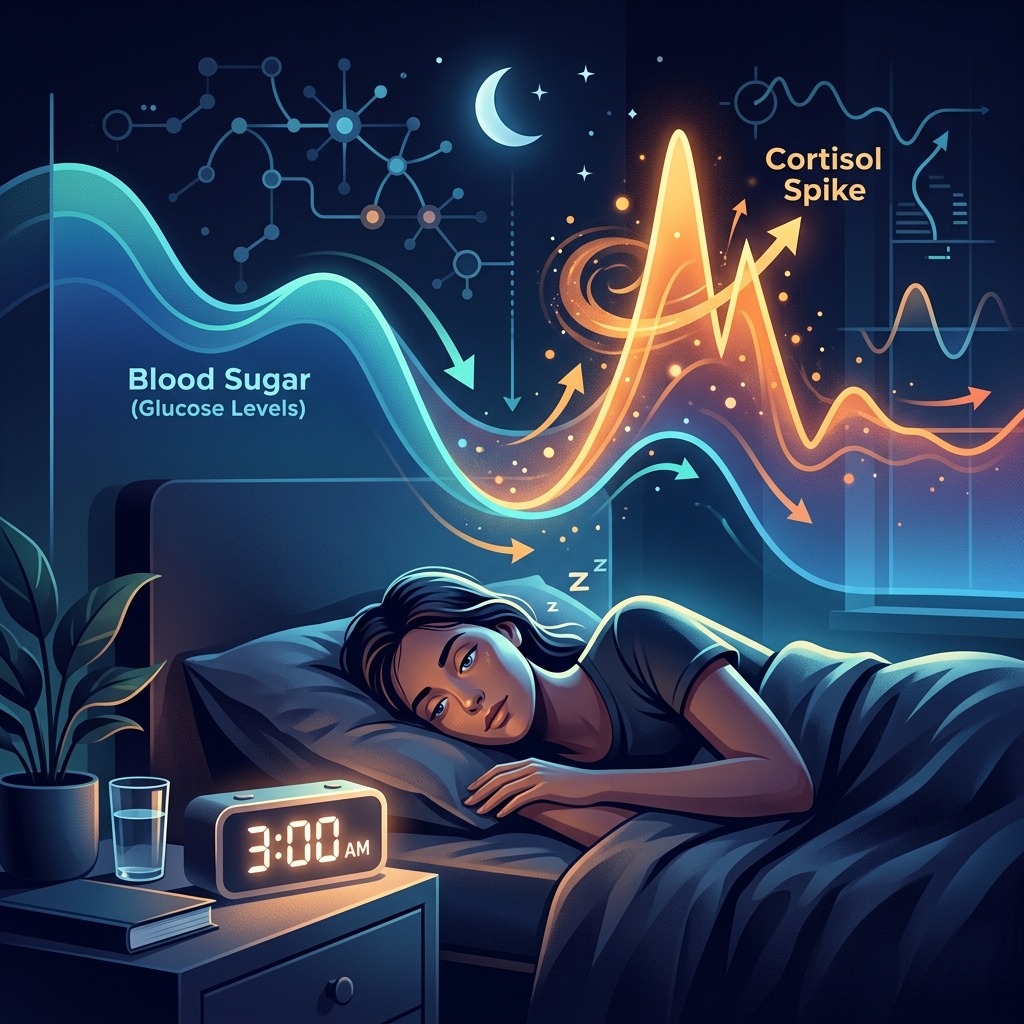
You fall asleep fine. Then four hours later, you are awake.
Not a gentle half-awake roll-over. Awake awake. Your mind turns on. You check the clock. It is 2:47AM, 3:12AM, or 4:03AM again. You try to force sleep, but now you are doing sleep math and wondering if this is cortisol, blood sugar, anxiety, magnesium, hormones, or your body just being difficult.
Waking up after 4 hours of sleep is usually not one single problem. It is often a timing problem. The second half of the night is lighter, your body starts preparing for morning, and small issues that did not wake you at midnight can wake you later.
The useful move is not to guess harder. It is to run a simple seven-night troubleshooting plan.
The Short Answer
If you keep waking up after 4 hours of sleep, the most common causes are:
- Stress or nervous system arousal
- Caffeine too late in the day
- Alcohol fragmenting the second half of sleep
- A bedroom or mattress that gets too warm
- Light exposure or clock-watching
- An inconsistent wake time
- Spending too much time in bed trying to force sleep
- Sleep apnea, reflux, nocturia, pain, or another medical factor
Cortisol can be part of the pattern, but it is not the whole story. Cortisol naturally rises before morning. That does not mean every 3AM wakeup is a cortisol spike you need to supplement away.
Still waking up after 4 hours? Start with The 3 AM Wake-Up Fix, a $7 printable guide: wake time, evening timing, bedroom setup, and exactly what to do when you wake up at night.
Why It Often Happens After 4 Hours
Your sleep is not the same all night.
The first part of the night is heavier on deep sleep. Your brain is harder to wake. Your body is also building sleep pressure from the day, so sleep tends to feel more stable.
After about four hours, several things shift:
- Deep sleep pressure has dropped.
- REM sleep becomes more common.
- Sleep gets lighter and more reactive.
- Body temperature and cortisol begin moving toward morning.
- Alcohol, late meals, stress, and caffeine can rebound.
- A warm mattress or heavy bedding may finally cross your wakeup threshold.
That is why the timing feels so specific. The problem may have started earlier in the day, but it shows up when your sleep is easiest to disturb.
Is It a Cortisol Spike?
Maybe. But do not let social media turn one possible factor into a diagnosis.
Cortisol rises naturally in the early morning as part of the cortisol awakening response. That is how your body prepares to wake up. If your stress load is high, your sleep schedule is unstable, or your nervous system is already wound up, that normal rise can feel like a jolt.
This version often feels like:
- You wake suddenly and feel alert.
- Your heart rate feels higher than expected.
- Your mind immediately starts solving problems.
- You feel warm or restless.
- You cannot stop checking the clock.
That can involve cortisol and stress physiology. But the same feeling can also come from alcohol rebound, caffeine, a hot room, sleep apnea arousals, reflux, pain, blood sugar swings, or anxiety about waking up itself.
For a deeper look at this pattern, read Why You Keep Waking Up at 3AM: Cortisol, Blood Sugar, and Supplements.
Common Reasons You Wake Up After 4 Hours
1. Stress is keeping your nervous system too close to awake
Stress does not always stop you from falling asleep. Sometimes you fall asleep because you are exhausted, then wake when sleep gets lighter.
This is common when the day never actually ends. Work pressure, conflict, financial stress, overtraining, travel, and constant phone stimulation can keep your arousal level high. You may sleep for a few hours, but your system is still close enough to alert that a small trigger wakes you fully.
If you wake with your mind already racing, start here.
Related guide: Sleep Anxiety: Why Your Brain Won't Shut Off at Night.
2. Caffeine is still active
Caffeine can stay in your system longer than you think. Even if you fall asleep normally, late caffeine can make sleep lighter and more fragmented.
This is the trap: you judge caffeine by whether you can fall asleep. But the better test is whether you stay asleep.
If you drink coffee, energy drinks, pre-workout, or strong tea after lunch, test a hard cutoff for seven nights. For many people, 12PM to 2PM is a better cutoff than late afternoon.
Related guide: Caffeine and Sleep: How Late Is Too Late?.
3. Alcohol is breaking the second half of the night
Alcohol is one of the most common reasons people sleep for three or four hours, then wake up hot, anxious, thirsty, or wide awake.
It can make you sleepy at first. Then it clears from your system and sleep becomes lighter. Heart rate can rise. REM sleep gets disrupted. You may wake in the exact window where you expected to be deepest asleep.
If this happens on drinking nights, do not overcomplicate it. Test 10 nights without alcohol close to bed, ideally no alcohol at all during the test window.
Related guide: Alcohol and Sleep: Why Drinking Wrecks Your Rest.
4. Your room or bed gets too warm
A room can feel fine at bedtime and become a problem later.
Heat builds in mattresses, pillows, heavy comforters, synthetic sheets, mattress protectors, and foam toppers. After four hours, the bed microclimate may be much warmer than the room.
This version often looks like:
- You wake warm around the same time.
- You kick off covers, then get cold later.
- Your pillow or mattress feels hot.
- The problem is worse with alcohol, heavy meals, or a warm room.
Read Why Do I Wake Up Hot at 3AM? if temperature is part of the pattern.
5. You are spending too much time in bed
This one annoys people because it sounds backward.
If you give yourself nine or ten hours in bed while your body only produces seven hours of actual sleep, your sleep can stretch thin. You may fall asleep quickly, sleep four or five hours, then wake and drift in and out for the rest of the night.
The fix is not to punish yourself with less sleep. It is to make your sleep window match your actual sleep for a while, then expand it once sleep gets consolidated.
A consistent wake time helps here more than a forced bedtime.
6. Clock-watching trains the wakeup
Checking the clock after waking seems harmless. It is not.
The second you see 3:17AM, your brain starts calculating. How many hours left? How bad will tomorrow be? Why does this keep happening? Should you take magnesium? Should you get up? Is this insomnia now?
That mental spike makes the wakeup stick.
Turn the clock away. Put the phone across the room. If you wake, do not check the time unless you truly need to know.
Related guide: Why Do I Wake Up in the Middle of the Night?.
7. Supplements are being used as the first fix
Magnesium glycinate, ashwagandha, L-theanine, glycine, and melatonin can help some people. They are not magic switches.
If caffeine is too late, the room is warm, alcohol is fragmenting sleep, or you are clock-watching every night, supplements are mostly fighting upstream.
Use supplements carefully and match them to the actual problem:
- Magnesium glycinate may fit tension, stress, or low magnesium intake.
- Ashwagandha may fit stress-driven sleep problems, but it usually takes weeks.
- Melatonin fits circadian timing problems better than random night waking.
- L-theanine may help mental chatter without heavy sedation.
If a supplement makes your sleep more fragmented, stop using it. The point is better sleep, not loyalty to a bottle.
8. Sleep apnea, nocturia, reflux, pain, or medical factors are waking you
Not every 4-hour wakeup is behavioral.
Consider a medical conversation if you have:
- Loud snoring
- Gasping, choking, or pauses in breathing
- Morning headaches
- High blood pressure
- Excessive daytime sleepiness
- Frequent urination at night
- Chest pain or shortness of breath
- Persistent reflux
- New or worsening night sweats
- Unexplained weight loss, fever, or severe fatigue
Sleep apnea is especially worth taking seriously. It can cause repeated arousals that feel like insomnia, anxiety, heat, or a racing heart.
Related guide: Sleep Apnea Symptoms: How to Tell If You Have It.
What to Do When You Wake Up After 4 Hours
The worst move is lying there fighting the night.
Try this instead.
Do not check the clock
If you know the time, your brain starts negotiating. If possible, make the time unavailable.
Keep lights low
Bright light tells your brain morning is coming. If you need the bathroom, use the lowest light possible.
Give sleep a chance, but do not force it forever
If you feel calm and sleepy, stay in bed. Let your body drift.
If you are alert, frustrated, or spiraling, get out of bed for a low-light reset. Sit somewhere boring. Read something dull. Do breathing or a body scan. Return when sleepy.
Do not start problem-solving
No work email. No sleep research. No symptom rabbit hole. No supplement shopping. Those are morning tasks.
Use a boring repeatable script
Tell yourself: "This is a normal wakeup. I do not need to solve it right now. Rest still counts."
That sounds simple because it is. The goal is to stop turning a wakeup into an emergency.
The 7-Night Troubleshooting Plan
Do this before you decide your sleep is broken.
Night 1: Track the pattern
Write down bedtime, wake time, caffeine timing, alcohol, room temperature, late meals, stress level, exercise, and wakeup time. Do not change everything yet.
Night 2: Lock your wake time
Pick a wake time you can keep for seven days. Get out of bed at that time even if the night was messy. This anchors the system.
Night 3: Move caffeine earlier
Set a hard cutoff. Start with 12PM to 2PM. If you are sensitive, go earlier.
Night 4: Cool the sleep setup
Lower the room temperature if possible. Remove one heat layer. Use lighter bedding. Change only one or two variables so you can tell what helped.
Night 5: Remove alcohol from the equation
If you drink, pause it for the test window. Alcohol is too disruptive to troubleshoot around.
Night 6: Stop clock-watching
Turn the clock away. Put the phone across the room. If you wake, run the boring reset instead of checking the time.
Night 7: Tighten the sleep window
If you spend a lot of time awake in bed, shorten the sleep opportunity slightly by keeping wake time fixed and moving bedtime later by 20 to 30 minutes. Do not do this aggressively. The goal is consolidated sleep, not sleep deprivation.
Want the full plan instead of guessing? Get The 3 AM Wake-Up Fix for $7: a 15-minute setup for tonight, a 3 AM card for your nightstand, and a 7-night tracker.
When Supplements Make Sense
Supplements can be useful after the basics are not obviously broken.
Use this decision rule:
- If you drink caffeine late, fix caffeine first.
- If alcohol is involved, fix alcohol first.
- If the room or mattress is hot, fix temperature first.
- If you check the clock every night, fix that first.
- If stress is the main pattern and basics are handled, then consider magnesium, L-theanine, or ashwagandha carefully.
Do not stack four sleep supplements because you woke up at 3AM twice. That is how you create side effects and learn nothing.
Start low. Change one thing at a time. Give it enough nights to judge. And if you take medication, are pregnant, have a medical condition, or suspect sleep apnea, talk to a clinician before experimenting.
When to Get Help
Get medical advice if the wakeups are paired with snoring, gasping, chest pain, shortness of breath, persistent night sweats, fever, unexplained weight loss, severe daytime sleepiness, or frequent urination.
Also get help if insomnia has become self-reinforcing. If you dread bedtime, panic when you wake, or spend hours awake several nights a week, a structured insomnia approach like CBT-I is often more effective than adding another supplement.
Bottom Line
Waking up after 4 hours of sleep does not mean your body forgot how to sleep.
It usually means the second half of your night is too easy to disrupt. Stress, caffeine, alcohol, heat, light, schedule drift, clock-watching, and medical factors can all push you over the line.
Start with the boring levers first. Fix wake time. Move caffeine earlier. Cool the bed. Stop checking the clock. Remove alcohol from the test window. Use supplements only after the basics are clean enough to judge.
That is not glamorous. It is just how you stop guessing and find the lever that actually moves your sleep.
Frequently Asked Questions
Why do I wake up after 4 hours of sleep?+
You usually wake up after 4 hours because sleep gets lighter in the second half of the night and stress, caffeine, alcohol, heat, light, or medical factors become easier to notice.
Is waking up after 4 hours a cortisol problem?+
It can involve cortisol, but cortisol is not the only cause. Cortisol naturally rises toward morning. Stress can amplify that rise, but caffeine, alcohol, temperature, sleep timing, sleep apnea, reflux, or nocturia can create the same pattern.
What should I do when I wake up after 4 hours?+
Do not check the clock. Keep lights low, avoid phone use, and give sleep a calm chance. If you are alert or frustrated, get out of bed for a quiet low-light reset and return when sleepy.
Can magnesium or ashwagandha help with 3AM waking?+
They may help some stress-driven sleep problems, but they should not be the first fix. Clean up caffeine timing, alcohol, bedroom temperature, wake time, and clock-watching first so you can tell whether a supplement actually helps.
When should I talk to a doctor about waking up after 4 hours?+
Get medical advice if the wakeups include loud snoring, gasping, chest pain, shortness of breath, persistent night sweats, fever, unexplained weight loss, severe daytime sleepiness, or frequent urination.
Sleep Smarter Editorial Team
Our editorial team researches and writes evidence-based sleep content grounded in peer-reviewed science. All articles reference established sleep research from sources including the NIH, AASM, and Sleep Foundation.