Melatonin for Sleep: The Right Dose (And Why You're Probably Taking Too Much)
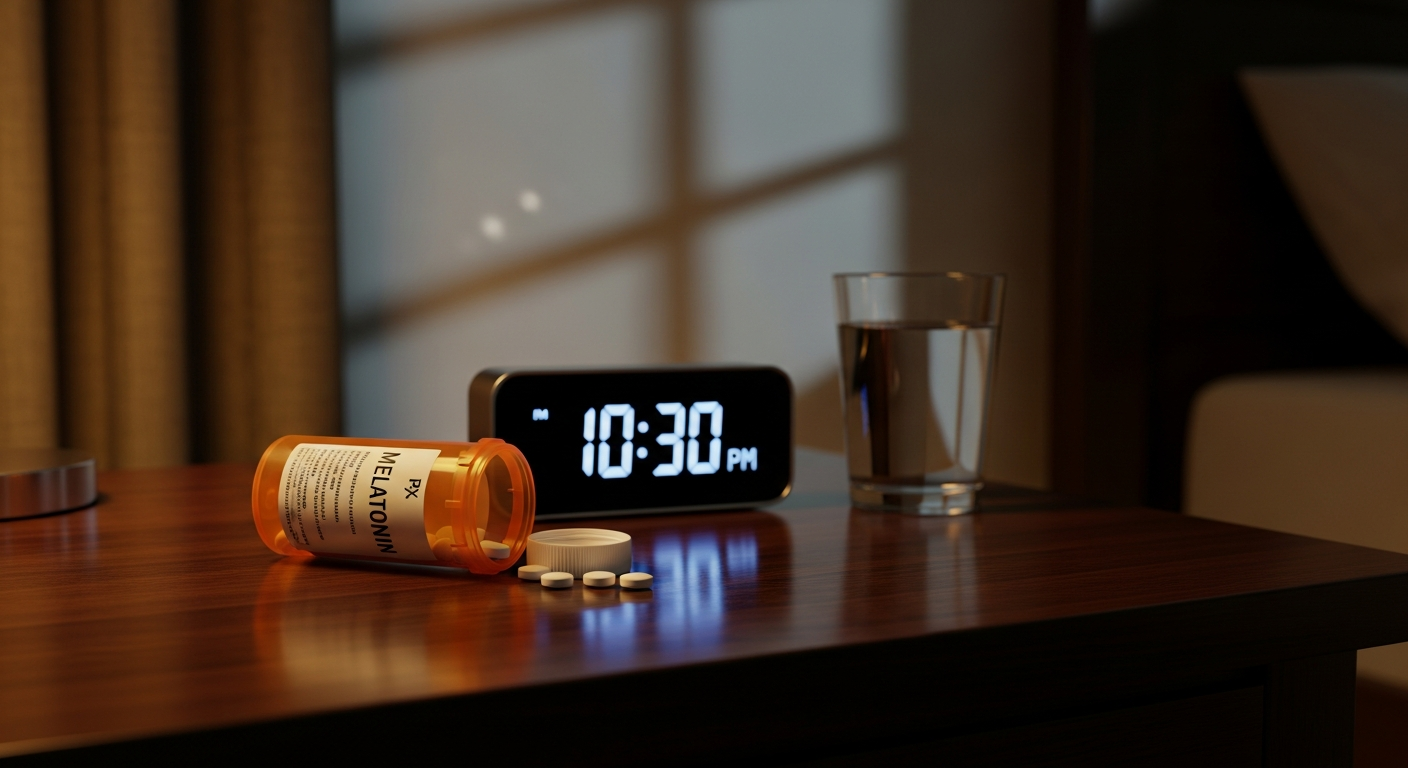
Most people taking melatonin are taking it wrong. Not dangerously wrong — just ineffectively wrong. Too much, too late, too randomly. And because melatonin is available over the counter in doses 5 to 10 times higher than what the research supports, millions of people are essentially wasting their money while wondering why it doesn't work as well as advertised.
Here's what the science actually says about melatonin — including the dose that works, the timing that matters, and why most supplements on pharmacy shelves are formatted for failure.
What Melatonin Actually Does (It's Not a Sleeping Pill)
The single most important thing to understand about melatonin: it is not a sedative. It does not knock you out. It does not deepen your sleep or keep you asleep longer. It is a timing signal.
Melatonin is a hormone produced by your pineal gland in response to darkness. Its job is to tell your brain and body that it's nighttime — shifting your circadian phase so that the biological processes associated with sleep (core body temperature drop, HPA axis suppression, adenosine buildup) can proceed on schedule. Think of it as a dimmer switch that cues the orchestra, not a switch that turns the lights off.
This distinction matters because it changes what melatonin is useful for — and what it isn't.
Melatonin works well for:
- Jet lag (shifting your circadian clock to a new time zone)
- Shift work (resetting a disrupted sleep-wake cycle)
- Delayed sleep phase disorder (DSPD), where your natural sleep window is shifted too late
- People over 55, whose natural melatonin production declines significantly with age
Melatonin is mostly ineffective for:
- Falling asleep faster if your circadian phase is already normal
- Staying asleep through the night
- Improving sleep quality in people who simply "don't sleep well"
- Chronic insomnia driven by anxiety, lifestyle factors, or poor sleep hygiene
If you're taking melatonin because your mind won't shut off at bedtime, you're using the wrong tool. That's a cortisol and arousal problem, not a melatonin deficiency.
The Dose Problem: You're Taking 10x Too Much
The standard melatonin gummy or tablet sold in most pharmacies comes in 5mg or 10mg doses. Some products go up to 20mg. This is wildly above what research supports — and the pharmacology explains why.
Your pineal gland naturally produces somewhere between 0.1mg and 0.3mg of melatonin on a typical night. That tiny amount is enough to signal nighttime to every cell in your body. The effective therapeutic dose in most clinical studies ranges from 0.1mg to 0.5mg. A meta-analysis published in Sleep Medicine Reviews found that lower doses (under 1mg) were as effective as higher doses for circadian phase shifting — and had fewer side effects.
When you take 5mg or 10mg, you're flooding your system with roughly 30–100x your natural nighttime level. This has several consequences:
-
Receptor desensitization. Like any hormone taken in pharmacological (rather than physiological) doses, chronic high-dose melatonin may downregulate your melatonin receptors over time — making you less responsive to both the supplement and your own natural melatonin.
-
Morning grogginess. High doses produce a melatonin "hangover." The supplement has a half-life of 30–60 minutes, but synthetic melatonin often remains active longer than natural melatonin. Taking 10mg at 10 PM can leave measurable melatonin in your system well into the next morning.
-
Hormonal disruption at high doses in specific populations. Studies in children and adolescents show that high-dose melatonin can affect puberty-related hormonal development. In adults, the evidence is less alarming but still cautions against unnecessary high-dose use.
The practical upshot: if you're using 5mg or 10mg melatonin and finding it either doesn't help or leaves you groggy, the dose is almost certainly your problem. Try 0.5mg.
The Timing Problem: When You Take It Changes Everything
Melatonin timing isn't "before bed." It's phase-specific — and getting it wrong can actually shift your sleep in the wrong direction.
Your natural melatonin onset is called DLMO (Dim Light Melatonin Onset) — the point at which your pineal gland starts secreting melatonin in response to darkness. For most people on a normal schedule, DLMO occurs roughly 2 hours before their natural sleep onset time. If you naturally fall asleep at midnight, your DLMO is around 10 PM.
Taking melatonin at DLMO (or slightly before) is effective. It reinforces the natural signal your body is already sending.
Taking melatonin too early (say, 4 hours before bed) can advance your circadian phase — useful for people trying to shift earlier, harmful for anyone with already-normal timing.
Taking melatonin too late (right as you're trying to fall asleep, or after you've already struggled for an hour) has minimal benefit for sleep onset, because the melatonin signal won't have time to cascade through the circadian system meaningfully.
The practical guideline most sleep researchers suggest: take low-dose melatonin (0.3–0.5mg) approximately 30 to 60 minutes before your target sleep time. Not your actual sleep time — your target time. If you're trying to shift your sleep earlier, take it 2+ hours before your current natural sleep onset.
The Format Problem: Not All Melatonin Is Equal
Beyond dose and timing, the format of melatonin matters more than most people realize.
Extended-release vs. immediate-release: Most melatonin supplements are immediate-release — they spike your melatonin level quickly, peak within 30–60 minutes, and decline. This matches the natural melatonin profile reasonably well. Extended-release formulations release melatonin over 3–6 hours, which can help with middle-of-the-night wake-ups, but also increase the risk of morning grogginess.
Gummies vs. sublingual: Gummies require digestion and have variable absorption — that 5mg gummy may deliver anywhere from 2–7mg of actual melatonin into your system depending on your gut motility and stomach contents. Sublingual (under-the-tongue) melatonin bypasses digestion, is absorbed faster, and reaches peak levels more predictably. For circadian timing purposes, sublingual is more reliable.
Third-party testing: Melatonin is a supplement, not a drug — which means the dose on the label is not guaranteed. A 2017 study in the Journal of Clinical Sleep Medicine tested 31 melatonin supplements and found that actual melatonin content varied from 83% below to 478% above the labeled dose. Some products were contaminated with serotonin. This isn't a minor issue if you're trying to take a precise low dose. Choose products with NSF, USP, or Informed Sport certification.
A well-formulated option in the low-dose range: Life Extension Melatonin 300mcg. It's 0.3mg — the physiological dose the research supports — third-party tested, and sold in sublingual format. It's what sleep researchers typically recommend when melatonin is appropriate.
Who Should Actually Use Melatonin
Given everything above, here's a clearer framework for whether melatonin makes sense for you.
Strong candidates for melatonin:
Jet lag. For eastward travel, take 0.5mg at your destination's target bedtime for 2–3 nights. For westward travel, take it at the same local time as your origin bedtime for 1–2 nights. This is one of the most robust applications of melatonin in the research literature.
Night shift workers. If you're trying to sleep during daytime hours, melatonin taken 30 minutes before your sleep period can help shift your internal clock toward a daytime sleep phase. Consistency matters more than dose here.
Adults over 55 with trouble falling asleep. Age-related melatonin decline is real and measurable. Low-dose melatonin (0.3–1mg) has more consistent efficacy in this population than in younger adults with normal melatonin production.
Delayed sleep phase syndrome. If your natural sleep window is shifted late (e.g., you can't fall asleep before 2–3 AM but have no problem sleeping in) and you need to function on a conventional schedule, melatonin taken 4–6 hours before your current natural sleep onset can gradually advance your phase over 2–4 weeks. This should ideally be done under guidance.
Poor candidates for melatonin:
- Adults under 40 with no circadian rhythm disruption whose main complaint is "my mind races at bedtime" (for racing thoughts, see sleep-onset anxiety and cognitive shuffling)
- People looking to improve sleep quality (depth, restorativeness, REM)
- Anyone whose primary problem is waking up in the middle of the night (melatonin won't help with sleep maintenance in most cases)
- Children and adolescents without specific medical need (consult a pediatric sleep specialist)
What to Combine With Melatonin (and What Not To)
If you're using melatonin as part of a broader sleep improvement approach, there are a few useful combinations:
Melatonin + Magnesium Glycinate Magnesium glycinate addresses the cortisol and nervous system arousal that melatonin can't touch. The combination is well-suited for adults who both need circadian support AND struggle with anxious arousal at bedtime. Take magnesium glycinate (200–400mg) 30–60 minutes before bed alongside low-dose melatonin. Nature Made Magnesium Glycinate is a reliable, well-absorbed form.
Melatonin + Morning Light Exposure This is the highest-leverage pairing available. Melatonin in the evening signals nighttime; bright light exposure within 30 minutes of waking signals daytime. The contrast between these two signals is what keeps your circadian clock tightly calibrated. If you're using melatonin for phase shifting and skipping morning light, you're working with one oar.
What to avoid combining with melatonin:
- Alcohol (disrupts melatonin metabolism and fragments sleep architecture, working directly against the goal)
- High-dose caffeine after noon (delays DLMO, meaning your melatonin supplement is fighting an uphill battle against artificial alerting)
- Screens in the 60 minutes before taking melatonin (blue light suppresses endogenous melatonin production; you're undercutting the supplement with the device you're using to set a reminder to take it)
The Truth About Long-Term Melatonin Use
One of the most common questions: "If I take melatonin every night, will my body stop making its own?"
The honest answer: the research doesn't fully support either extreme position. There's no strong human evidence that nightly low-dose melatonin significantly suppresses endogenous production in healthy adults. But there's also not robust long-term safety data for nightly use beyond 6 months — it simply hasn't been studied at scale.
The conservative approach, supported by most sleep specialists: use melatonin situationally rather than nightly. If you're using it for jet lag or shift work, defined short-term use is clearly appropriate. If you're using it as an ongoing sleep aid, cycling off every 2–3 weeks is a reasonable precaution — and the breaks help you assess whether the underlying sleep issue has resolved or whether you've been masking it.
If you find you "can't sleep without melatonin" after a few months of nightly use, that's worth paying attention to. It may indicate psychological dependence (easy to address), or it may mean the original sleep issue (circadian disruption, anxiety, sleep hygiene) was never actually fixed.
A Better Framework for Better Sleep
Melatonin is a useful tool with a specific lane. Used correctly — right dose, right timing, right context — it works. Used as a generic "sleep pill" in the high doses sold at most pharmacies, it's mostly noise.
The most effective sleep interventions aren't any single supplement. They're systems: consistent sleep-wake timing, controlled light exposure, thermal regulation, managed stress, and the kind of behavioral habits that prevent conditioned arousal. Melatonin, used correctly, can support that system. It can't replace it.
If you want a structured 7-day system that addresses circadian rhythm, cortisol, sleep environment, and behavioral patterns together — not just one piece in isolation — the 7-Day Sleep Reset Protocol walks through the full framework. It's $17 and built around the same research-backed principles that make the interventions above work.
Frequently Asked Questions
What is the correct dose of melatonin for sleep?+
Research supports 0.3–0.5mg — far lower than the 5–10mg sold in most stores. Your body naturally produces 0.1–0.3mg per night, so pharmacological doses create unnecessary side effects without added benefit.
When should I take melatonin?+
Take low-dose melatonin 30–60 minutes before your target sleep time. For circadian phase shifting, timing matters more than dose — taking it too early or too late can work against you.
Does melatonin actually make you sleepy?+
No. Melatonin is a timing signal, not a sedative. It tells your body it's nighttime so biological sleep processes can proceed on schedule. It doesn't directly cause drowsiness.
Will nightly melatonin suppress my natural production?+
Evidence in healthy adults is reassuring at low doses, but long-term nightly use beyond 6 months lacks robust safety data. Using it situationally rather than nightly is the conservative approach most sleep specialists recommend.
Who benefits most from melatonin?+
Jet lag sufferers, shift workers, adults over 55 with declining natural melatonin, and people with delayed sleep phase syndrome. It has limited efficacy for anxiety-driven insomnia or improving sleep quality.
Keep Reading
Sleep Smarter Editorial Team
Our editorial team researches and writes evidence-based sleep content grounded in peer-reviewed science. All articles reference established sleep research from sources including the NIH, AASM, and Sleep Foundation.