Why You Wake Up in the Middle of the Night (And How to Fix It)
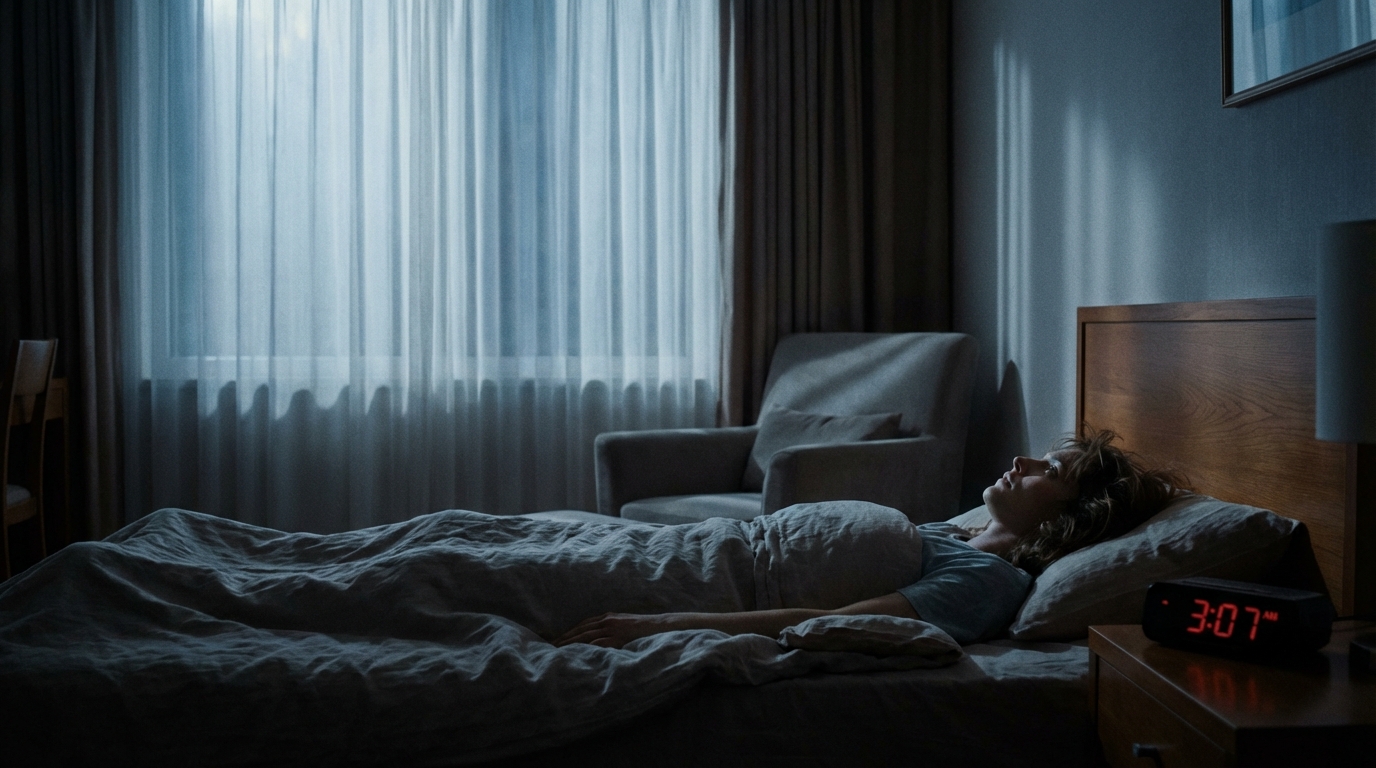
It happens the same way every night. You fall asleep fine — maybe even faster than usual — and then somewhere around 2, 3, or 4am, your eyes snap open. You're not groggy. You're completely, infuriatingly awake. Your mind starts running. You check the clock, do the math on how many hours you have left, and then spend the next hour staring at the ceiling wishing you could just get back to sleep. If this is you, you're not broken, and you're not alone. What you're experiencing has a name, a mechanism, and — most importantly — a set of real, science-backed fixes.
Why Your Sleep Architecture Is Working Against You
To understand why you wake up in the middle of the night, you need to understand how sleep actually works.
Sleep isn't a flat, uniform state. It's a series of 90-minute cycles, each moving through lighter sleep stages (N1, N2), deep slow-wave sleep (N3), and REM. Early in the night — during the first two cycles — your body front-loads deep slow-wave sleep. This is the physically restorative phase: tissue repair, immune function, growth hormone release. It's dreamless, heavy, and hard to wake from.
By the second half of the night, the composition shifts dramatically. Deep sleep becomes scarce. Your cycles are now dominated by REM — lighter, more cognitively active, easier to wake from. This is why middle-of-the-night waking almost never happens at 10pm or 11pm. It happens between 2am and 5am, when your body has already banked most of its deep sleep and you're cycling through lighter stages. The slightest disruption — a cortisol spike, a blood sugar dip, a noise, a temperature shift — can pull you fully conscious when you'd otherwise drift back down.
That's the architecture. Now here's what's actually triggering your specific wake-up.
The 5 Real Causes (Most Articles Miss Half of These)
1. The Cortisol Awakening Response
Cortisol — your primary stress hormone — follows a daily rhythm. It peaks shortly after you wake up (helping you feel alert) and is supposed to hit its lowest point around midnight. But for many people, particularly those under chronic stress, cortisol starts rising prematurely in the early morning hours, sometimes as early as 3am.
This early cortisol surge activates your brain's arousal systems before you intend to wake up. The result feels like being switched on — alert, sometimes anxious, unable to drift back to sleep. Research published in Psychoneuroendocrinology shows that people with elevated chronic stress have a blunted cortisol rhythm, meaning the hormone stays elevated longer and rises earlier. If you wake up feeling wired rather than groggy, this is likely your mechanism.
2. The Blood Sugar Crash
Your liver releases stored glucose throughout the night to keep your brain fueled. But if blood sugar drops below a threshold — common in people who eat high-glycemic dinners, skip evening snacks, or are insulin-sensitive — your body triggers a stress response. Adrenaline and cortisol surge to compensate, and that surge wakes you up.
The clue: you wake up slightly anxious, maybe with a racing heart, and feel better after eating or drinking something with a small amount of carbohydrate. People who eat a late dinner high in refined carbs often see this pattern: the blood sugar spike from dinner crashes 4-5 hours later, landing squarely in the 2-3am window.
3. Alcohol Rebound
Alcohol is the most misunderstood sleep aid in existence. Yes, it helps you fall asleep faster — it's a sedative. But it metabolizes out of your system in about 4-5 hours, and when it does, your brain rebounds. REM sleep, which alcohol suppresses, comes roaring back. Brain activity spikes. You surface into lighter sleep or wake entirely.
If you have a drink or two with dinner at 7pm, the alcohol is largely metabolized by midnight to 1am, right as you're entering that second-half REM-heavy phase. The rebound hits right when you're most vulnerable to waking. Even one drink can disrupt the second half of your night significantly.
4. Stress-Induced Hyperarousal
Chronic stress keeps your sympathetic nervous system — your fight-or-flight system — in a low-level activated state. The technical term is hyperarousal, and it's the dominant mechanism behind both difficulty falling asleep and middle-of-the-night waking. Your nervous system is essentially scanning for threats. During the lighter sleep stages of the early morning hours, that threat-scanning reaches a hair trigger.
This is the mechanism that CBT-I (Cognitive Behavioral Therapy for Insomnia) addresses most directly. And it's why relaxation techniques, breathing exercises, and thought restructuring have a genuine evidence base — they directly reduce the hyperarousal that's pulling you out of sleep.
5. Sleep Apnea (The One You Don't Know You Have)
Sleep apnea causes micro-arousals every time breathing is obstructed — which can happen dozens of times per hour. Most people with sleep apnea have no idea they have it. They don't necessarily snore loudly or feel like they're choking. They just wake up repeatedly, often blaming stress or poor sleep habits.
If you wake up in the middle of the night consistently, wake unrefreshed, and have a bed partner who's noticed any irregularity in your breathing, this warrants a conversation with your doctor. It's more common than most people assume — roughly 1 billion people globally have some form of it — and it's eminently treatable.
Why 3am Hits Different Than 4am
There's a reason people talk about "3am wake-ups" specifically. The cortisol curve, the blood sugar timing, and the shift from deep sleep to REM all converge most powerfully in the 2-4am window. By 5am, your cortisol is rising intentionally — your body is beginning its natural waking process. The 5am wake-up feels different because in many ways it is: your sleep pressure is genuinely spent, and your circadian rhythm is naturally pulling you toward consciousness.
True early morning awakening — waking between 4am-5am unable to get back to sleep — can also be a signal worth paying attention to medically. It's one of the classic symptoms of depression, elevated cortisol disorders, and in some cases, undiagnosed hypertension. If it's persistent and accompanied by low mood, it's worth mentioning to your doctor.
The Magnesium Fix (And Why It Actually Works)
Of all the supplements that have real mechanistic evidence for middle-of-the-night waking, magnesium glycinate stands out. Here's why it's not just placebo:
Magnesium activates GABA receptors — the same inhibitory system that sleep medications target. It also regulates the HPA axis, the cortisol-producing stress pathway. Low magnesium (which is extremely common — estimates suggest 50-80% of Americans are deficient) is directly associated with elevated cortisol, hyperarousal, and disrupted sleep architecture. One study in the Journal of Research in Medical Sciences showed that magnesium supplementation significantly improved sleep time, sleep efficiency, and early morning awakening in older adults.
The glycinate form is important. Magnesium oxide (the cheap stuff) has poor bioavailability and commonly causes digestive issues. Magnesium glycinate binds the mineral to glycine, an amino acid that itself has sedative properties and has been shown to improve sleep quality in separate research.
Doctor's Best High Absorption Magnesium Glycinate is a well-regarded, bioavailable option taken by many people specifically for sleep. A typical dose is 200-400mg taken 30-60 minutes before bed. Effects are cumulative — most people notice a meaningful change within 1-2 weeks.
If you've tried the basics and you're still waking up every night, the issue is likely a pattern your nervous system has learned — and you can unlearn it. The 7-Day Sleep Reset Protocol walks you through a structured week of sleep pressure rebuilding, cortisol regulation strategies, and stimulus control techniques specifically designed to break chronic middle-of-the-night waking. It's the approach that works when "just relax" doesn't.
CBT-I Techniques That Actually Work at 3am
CBT-I (Cognitive Behavioral Therapy for Insomnia) has a stronger evidence base than any sleep medication, with long-term outcomes that medications don't deliver. Here are the core techniques specifically for middle-of-the-night waking:
Stimulus Control. Your brain learns associations. If you lie in bed awake for long periods, your bed becomes associated with wakefulness rather than sleep. The fix: if you've been awake for 20 minutes, get up. Go to another room. Do something calm and non-stimulating until you feel sleepy, then return to bed. This sounds counterintuitive, but it's among the most evidence-backed interventions in sleep medicine.
Cognitive Restructuring. The anxiety about being awake — "I have to be up in three hours, this is a disaster" — amplifies cortisol and makes returning to sleep neurologically harder. Clock anxiety is real. Reframing: "This is uncomfortable, but my body knows how to sleep. I don't need to do anything right now except let my nervous system settle" has measurable physiological effects.
Sleep Restriction Therapy. This is the nuclear option, but it works. By temporarily limiting your time in bed to match your actual sleep time (creating significant sleep pressure), you rebuild drive-to-sleep so powerfully that the middle-of-the-night waking becomes nearly impossible. This is best done with guidance — the 7-Day Sleep Reset includes a structured version of it.
The Paradoxical Intention Technique. Rather than trying to fall back asleep, lie still and try to stay awake with your eyes open. For many people, this reduces performance anxiety enough that sleep returns spontaneously. It sounds absurd. It has a solid evidence base.
Environmental Factors That Keep Pulling You Out of Sleep
The second half of your night is lighter sleep — meaning you're far more sensitive to environmental disruptions than you are during the early deep-sleep phase. Temperature is the biggest lever most people ignore.
Your core body temperature needs to drop 1-2°F to initiate and maintain sleep. In the early morning hours, if your bedroom warms up — even slightly — your body can't execute that temperature drop efficiently, and you surface into wakefulness. Keeping your bedroom between 65-68°F is the standard recommendation, but the bigger issue for many people is their bedding.
If you tend to overheat at night, this isn't just comfort — it's a physiological barrier to sleep maintenance. Silk bedding, specifically mulberry silk, has natural thermoregulation properties that synthetic and cotton fabrics can't match. Promeed's Luxgen™ silk pillowcase→ and their CoolRest™ comforter→ are designed specifically for this — OEKO-TEX certified, thermoregulating materials that help maintain a stable microclimate across the second half of your night, reducing the temperature fluctuations that cause early morning arousal.
It's not a magic cure, but if you're consistently warm when you wake up at 3am, this is a direct mechanism worth addressing.
When Middle-of-the-Night Waking Is a Medical Signal
Some cases of persistent middle-of-the-night waking are pointing at something systemic:
- Undiagnosed hypertension: High blood pressure disrupts sleep architecture in clinically documented ways. If you have cardiovascular risk factors and persistent middle-of-the-night waking, this connection is worth investigating.
- Depression: Early morning awakening (consistently waking 2-3 hours before desired wake time and being unable to return to sleep) is a classic depressive symptom. The cortisol dysregulation in depression is particularly pronounced in the early morning hours.
- Thyroid dysfunction: Both hyper- and hypothyroidism can disrupt sleep, and thyroid issues are frequently undiagnosed, particularly in women.
- Perimenopause: Hormonal fluctuations dramatically affect sleep architecture. Night sweats — themselves a thermoregulatory disruption — frequently trigger middle-of-the-night waking.
If you've addressed the lifestyle and behavioral factors and you're still waking consistently, getting basic bloodwork done (thyroid, cortisol, blood pressure) is a legitimate next step.
A Simple Protocol to Start Tonight
You don't need to do everything at once. Here's a realistic hierarchy:
- Cut alcohol entirely for two weeks. If your waking resolves, you have your answer.
- Add magnesium glycinate (200-400mg) 45 minutes before bed.
- Drop your bedroom temperature to 65-67°F. Swap to lighter, breathable bedding.
- Set a consistent wake time and hold it regardless of how your night went. This rebuilds sleep pressure.
- Implement the 20-minute rule: If you're awake more than 20 minutes, get up. Don't fight it in bed.
- Kill the clock anxiety. Turn your clock away from you. Knowing exactly how many hours of sleep you've lost does nothing useful.
This protocol addresses the most common causes in sequence. Most people who stick with it for two weeks see a meaningful reduction in middle-of-the-night waking. Those who need more structured support — a guided week of sleep restriction, stimulus control, and nervous system regulation — get exactly that in the 7-Day Sleep Reset.
The 3am wake-up feels like your body is betraying you. It's not. It's doing exactly what it was designed to do — it's just responding to the wrong signals. Change the signals, and the waking stops.
Frequently Asked Questions
Why do I wake up at 3am every night?+
The most common causes are premature cortisol surges, blood sugar drops, alcohol metabolism rebound, stress-induced hyperarousal, and undiagnosed sleep apnea. The 2-4am window is when your sleep shifts from deep slow-wave sleep to lighter REM cycles, making you more vulnerable to waking.
Is waking up in the middle of the night normal?+
Occasional middle-of-the-night waking is normal — everyone has brief arousals between sleep cycles. Waking and being unable to return to sleep for 20+ minutes regularly is not normal and points to a correctable cause.
What helps you fall back asleep after waking at night?+
The most evidence-backed approach is stimulus control: if you have been awake more than 20 minutes, get out of bed and do something calm until you feel sleepy again. Staying in bed while awake trains your brain to associate bed with wakefulness. Also try the paradoxical intention technique — try to stay awake with eyes open — which reduces performance anxiety around sleep.
Does magnesium help with middle-of-the-night waking?+
Yes, particularly magnesium glycinate. Magnesium activates GABA receptors and regulates cortisol production. Studies show it improves sleep efficiency and reduces early morning awakening. Take 200-400mg 30-60 minutes before bed; effects build over 1-2 weeks.
When should I see a doctor about waking up at night?+
See a doctor if waking is persistent and accompanied by low mood (possible depression), you snore or your partner notices breathing irregularities (possible sleep apnea), you have cardiovascular risk factors, or you are perimenopausal with night sweats. Basic bloodwork for thyroid and cortisol is also worth considering after ruling out lifestyle causes.
Keep Reading
Sleep Smarter Editorial Team
Our editorial team researches and writes evidence-based sleep content grounded in peer-reviewed science. All articles reference established sleep research from sources including the NIH, AASM, and Sleep Foundation.