Alcohol and Sleep: Why That Nightcap Is Ruining Your Deep Sleep
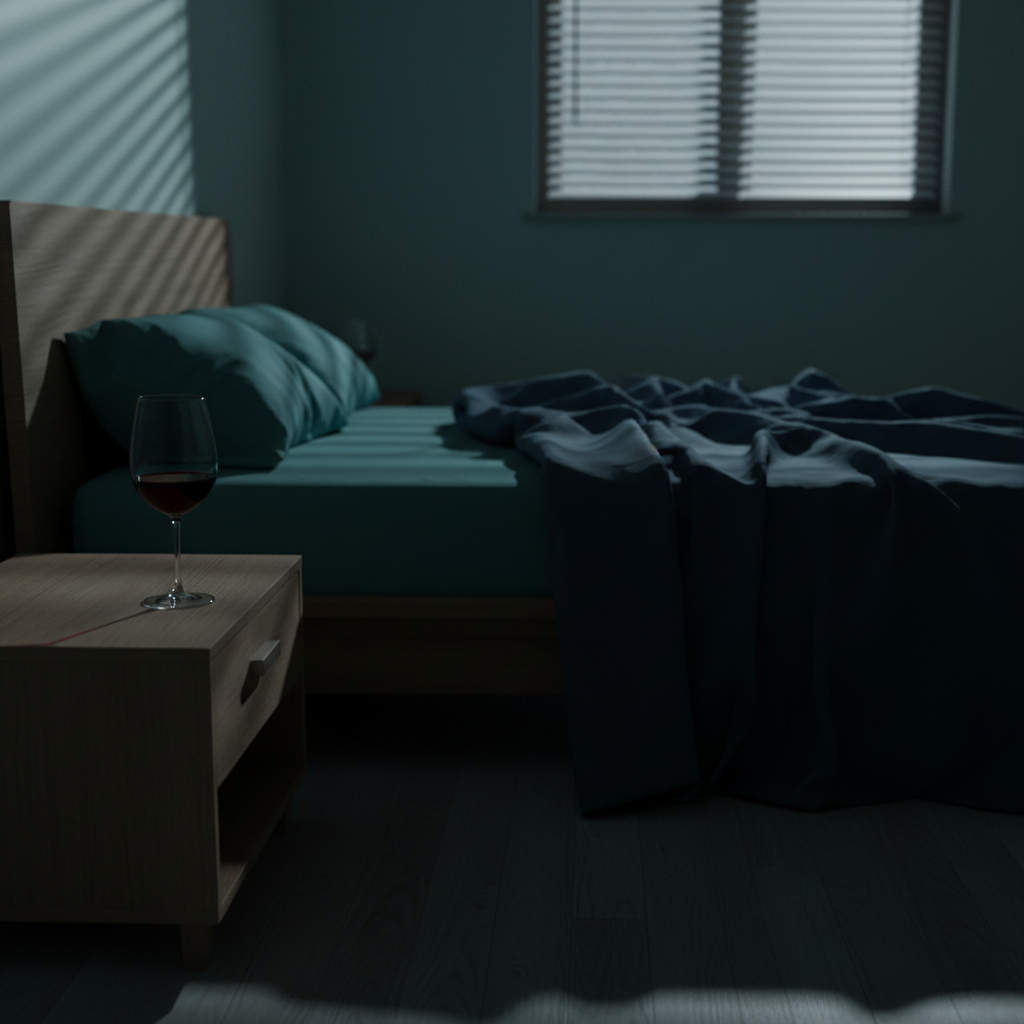
You pour a glass of wine to wind down. An hour later, you're asleep faster than usual — and you take that as proof it worked. Then 3 AM arrives. You're wide awake, heart thumping, mouth dry, brain suddenly busy with every unfinished task from the week. You stare at the ceiling until 5, drift off for an hour, and drag yourself through the next day feeling worse than if you'd never slept at all.
This isn't a hangover in the traditional sense. This is what alcohol actually does to your sleep — and it's been documented in sleep labs for decades. Understanding the mechanism is the first step to doing something about it.
Why Alcohol Feels Like a Sleep Aid
Alcohol is a central nervous system depressant. When you drink, it enhances the effects of GABA — the brain's primary inhibitory neurotransmitter — and suppresses glutamate, which promotes wakefulness and alertness. The result feels a lot like relaxation: muscles loosen, anxiety quiets, the mental chatter slows. For someone who struggles to fall asleep, this is seductive.
It works, in the narrow sense. Studies consistently show that moderate alcohol consumption shortens sleep onset latency — the time it takes to fall asleep — by roughly 10 minutes on average. For problem sleepers who lie awake for 45 minutes before drifting off, that reduction feels significant.
This is why the nightcap became culturally embedded. It works for step one. It completely fails at every step after.
What Actually Happens to Your Sleep Architecture
Sleep is not a uniform state. A healthy night cycles through distinct stages — light sleep (NREM stages 1 and 2), deep or slow-wave sleep (NREM stage 3), and REM (rapid eye movement) sleep — roughly every 90 minutes. Each stage serves a different biological function, and they're not interchangeable.
Deep sleep drives physical recovery: tissue repair, immune strengthening, growth hormone release. REM sleep handles memory consolidation, emotional processing, and cognitive maintenance. When you lose either, you don't just feel tired — you're running a deficit in biological repair that compounds over time.
Alcohol systematically disrupts both, in a predictable two-phase pattern that sleep researchers have mapped in detail.
Phase 1 (First half of the night): Alcohol suppresses REM sleep. The first two or three sleep cycles — normally the ones where REM is shortest — are almost entirely delta wave-dominant. Your tracker, if you use one, might show impressive "deep sleep" numbers for the first few hours. Don't be fooled. Research published in Alcoholism: Clinical and Experimental Research found that alcohol increases slow-wave sleep in the first half of the night, but this comes with a cost it defers to the second half.
Phase 2 (Second half of the night): As your body metabolizes the alcohol, the sedative effect wears off and a rebound occurs. Your nervous system, which has been suppressed, fires back. REM pressure builds dramatically — and so does sympathetic nervous system activation. Heart rate climbs. Sleep becomes fragmented. You surface into lighter and lighter stages, waking repeatedly between 2 and 5 AM, often for good.
This is the mechanism behind the classic alcohol sleep pattern: out fast, shattered by 3 AM.
The REM Debt You're Running
A 2020 meta-analysis in JMIR Mental Health synthesized data from 27 studies covering over 500,000 nights of tracked sleep and found that alcohol consumption — even at moderate levels — reduced REM sleep by an average of 9.3% overall, with the effect strongest in the second and third sleep cycles.
REM sleep isn't a luxury. It's when your brain processes the emotional weight of the day, consolidates explicit and procedural memories, and maintains the kind of cognitive flexibility that determines how creatively and clearly you think. A chronic REM deficit — which is exactly what regular nightcap drinking produces — looks clinically similar to sleep deprivation: mood dysregulation, impaired working memory, slower reaction times, reduced ability to form new memories.
You might sleep eight hours after a few drinks. You will not have gotten eight hours of restorative sleep. The quantity is there. The architecture is fractured.
Alcohol and the 3 AM Wake-Up
If you're a regular reader of this site, you've probably encountered our deep dives into why people wake up at 3 AM. Cortisol, blood sugar crashes, and hyperarousal all feature prominently. Alcohol creates a perfect storm of all three simultaneously.
The cortisol connection: alcohol disrupts the normal suppression of cortisol during the night. A study in the Journal of Studies on Alcohol and Drugs found that even a single moderate drinking session elevated late-night cortisol levels significantly, with the spike typically occurring 4–6 hours after drinking — which maps directly to that 2–4 AM window.
The blood sugar connection: alcohol initially causes blood sugar to drop (hypoglycemia), then rebound. That hypoglycemic dip can trigger a stress response in the middle of the night, releasing adrenaline to stimulate glucose release — and waking you up in the process. This is amplified if you drink on an empty stomach or pair drinking with a light dinner.
The temperature connection: alcohol is a vasodilator. It causes your blood vessels to expand, which feels warm initially but actually accelerates core body heat loss. Since core body temperature drop is one of the primary signals your body uses to maintain deep sleep, alcohol-induced temperature fluctuations directly interfere with sleep continuity throughout the night.
Does Even One Drink Matter?
Yes — and the research on this is more clear-cut than most people want to hear.
A 2022 study published in JMIR Formative Research analyzed data from nearly 4,000 participants using a wrist-based sleep tracker (Fitbit Inspire HR) and found that even one alcoholic drink reduced sleep quality scores measurably, with the effect increasing linearly with each additional drink. The effect was present regardless of whether participants felt like their sleep was disrupted.
This is the tricky part: alcohol impairs your ability to assess your own sleep quality. The sedative phase feels like good, deep rest. You might wake up feeling like you slept fine when your actual restorative sleep was significantly compromised.
The dose-response relationship, based on current evidence:
- 1 drink: Modest REM reduction, mild sleep fragmentation in the second half
- 2 drinks: Significant REM suppression, notable increase in nighttime awakenings
- 3+ drinks: Severe REM disruption, major second-half fragmentation, next-day cognitive impairment
"Having a couple of drinks" is, from a sleep architecture perspective, a meaningful event — not a neutral one.
Alcohol and Sleep Apnea
If you or your partner snores, or if you've ever been told you might have sleep apnea, alcohol warrants specific attention. Alcohol is a muscle relaxant, and this includes the muscles of the upper airway. Studies in the American Journal of Respiratory and Critical Care Medicine have found that alcohol consumption significantly increases the frequency and duration of obstructive apnea events — even in people who don't have a formal diagnosis.
In other words, someone with mild, undiagnosed sleep apnea who drinks regularly may be converting occasional airway obstructions into a significant nightly problem without knowing it. The result isn't just snoring. It's repeated micro-arousals, reduced oxygen saturation, cardiovascular stress, and the kind of non-restorative sleep that leaves you exhausted despite seemingly adequate hours.
If you wake up regularly feeling unrested and you drink most evenings, a sleep apnea evaluation is worth considering before you try anything else.
How Long Until Alcohol Clears Your Sleep
Timing matters more than most people realize. The commonly cited guidance — stop drinking three hours before bed — is a reasonable minimum but not sufficient for optimizing sleep architecture.
A more useful framework, based on alcohol's metabolic timeline:
- The liver metabolizes roughly one standard drink per hour
- 3–4 drinks may still be partially present in your system 4+ hours later
- Peak sleep disruption from alcohol occurs during the metabolic clearance window — which, depending on timing and volume, lands squarely in that 2–5 AM period
For those trying to protect sleep quality while still drinking occasionally, stopping 4+ hours before bedtime and keeping consumption to 1–2 drinks produces meaningfully better outcomes than the same volume consumed later or in larger quantity.
What Works Instead
The reason people reach for alcohol before bed is real: they need a transition mechanism. Work mode to rest mode requires a bridge, and alcohol is a convenient, socially normalized one. The solution isn't just "drink less" — it's building a replacement.
Magnesium glycinate is the most evidence-supported supplement for evening relaxation. It works via a similar pathway to alcohol — GABA modulation — without the metabolic rebound effect. A 2017 study in PLoS ONE found that magnesium supplementation improved sleep efficiency, sleep time, and early morning awakening in adults with insomnia. Typical dose: 200–400mg taken 30–60 minutes before bed. Magnesium Glycinate on Amazon is an accessible starting point.
L-Theanine, found naturally in green tea, promotes alpha wave activity in the brain — the same relaxed-but-alert state associated with meditation. At a dose of 100–200mg in the evening, it takes the edge off the day's mental activation without sedation, and without any effect on sleep architecture. L-Theanine on Amazon has been popular with the SleepSmarter community for exactly this use.
Temperature-based wind-down: Since one reason alcohol "works" is the initial warmth followed by temperature drop, you can replicate the sleep-onset signal by taking a warm shower or bath 60–90 minutes before bed. The subsequent core temperature drop mimics the physiological state that typically accompanies deep sleep onset.
Cognitive shuffling or structured wind-down routines can replace the "turn my brain off" function that alcohol serves. If your main driver is quieting a racing mind rather than genuine physical tension, these behavioral tools address the actual problem more effectively than pharmacological sedation.
If you haven't already, the Sleep Reset Protocol at SleepSmarter walks through a complete framework for rebuilding your sleep routine from the ground up — including the wind-down phase that most people are missing.
What Happens If You Drink Every Night
Occasional alcohol disrupts sleep. Habitual alcohol reshapes it in ways that outlast the habit.
Chronic nightly drinking — even at moderate levels — causes long-term changes to sleep architecture. A 2021 review in Alcohol and Alcoholism found that long-term regular drinkers experience a progressive shift toward lighter, more fragmented sleep, with reduced slow-wave sleep even on nights when they don't drink. The brain essentially recalibrates its baseline sleep architecture around the presence of alcohol.
This is the insidious part of using alcohol as a sleep aid: over time, sober sleep begins to feel impossible. The anxiety that alcohol was supposedly treating becomes worse in its absence, partly due to rebound hyperexcitability — a mild withdrawal effect that manifests as difficulty falling asleep, hyperarousal, and vivid dreams. This creates a dependency loop that can be difficult to recognize precisely because the "cure" and the "cause" feel indistinguishable.
If you find that you can't fall asleep without a drink, that's not a personality quirk. It's a neurological adaptation to alcohol as a sleep initiator, and it's worth taking seriously.
Breaking the pattern typically requires 2–3 weeks of adjusted sleep quality before baseline architecture normalizes. Nights 1–3 without alcohol after regular use often feel worse — more fragmented, lighter sleep, more vivid dreaming — before improvement begins. Knowing this in advance makes the adjustment period more manageable.
How to Test the Impact on Your Own Sleep
If you track sleep with a wearable, you have everything you need to run a simple personal experiment.
Spend two weeks logging your alcohol intake alongside your sleep data. Most trackers make this straightforward. Look specifically at:
- REM sleep percentage on drinking vs. non-drinking nights
- HRV (heart rate variability) the morning after — alcohol reliably suppresses HRV, which reflects nervous system recovery
- Resting heart rate overnight — elevated overnight HR is one of the clearest alcohol signals your tracker will register
- Sleep efficiency — the ratio of time asleep to time in bed
Researchers at the University of Helsinki found, in a study of 4,098 participants, that even a single drink elevated overnight resting heart rate by an average of 4.2 BPM and reduced HRV by 8%. These are measurable, consistent signals. If your tracker is showing you good deep sleep scores on drinking nights, the aggregate data — HRV, HR, efficiency — will tell a different story.
The Bottom Line
Alcohol is not a sleep aid. It is a sedative that accelerates sleep onset while systematically dismantling the restorative architecture that makes sleep worth having. The version of sleep you get after drinking — even moderately — is shallower, more fragmented, REM-depleted, and cortisol-elevated in its second half.
The pattern is consistent whether you feel it or not. The disruption to deep and REM sleep happens at the biological level, below your conscious experience of "I slept fine."
If you regularly use alcohol to wind down and regularly wake up between 2 and 5 AM feeling unrested despite adequate hours, you now know why. The fix isn't complicated — but it does require replacing a habit, not just removing one.
If alcohol-shortened sleep is stacking up across the week, use the Sleep Debt Calculator to estimate the deficit and recover gradually.
Frequently Asked Questions
Does alcohol help you sleep?+
Alcohol can help you fall asleep faster by acting as a sedative, but it severely disrupts sleep quality — suppressing REM sleep, fragmenting the second half of the night, and elevating cortisol. The net effect is less restorative sleep despite adequate hours.
Why do I wake up at 3AM after drinking?+
Alcohol metabolizes over 4-6 hours, triggering a rebound effect as it clears your system. This causes cortisol spikes, blood sugar fluctuations, and nervous system activation — all peaking around 2-4 AM, which is why waking up in that window after drinking is so common.
How much alcohol disrupts sleep?+
Even one drink measurably reduces sleep quality. Research shows a linear dose-response: each drink progressively reduces REM sleep and increases nighttime awakenings. Two or more drinks cause significant REM suppression; three or more cause severe architectural disruption.
What can I drink instead of alcohol to relax before bed?+
Magnesium glycinate (200-400mg) and L-Theanine (100-200mg) are the most evidence-backed alcohol alternatives for evening relaxation. Both promote calm without sedation and without disrupting sleep architecture. Chamomile tea and tart cherry juice also have supporting evidence.
How long before bed should I stop drinking?+
At minimum, stop drinking 3-4 hours before bed. For best sleep quality, longer is better — alcohol consumed 5+ hours before sleep has significantly less impact on sleep architecture than the same amount consumed 1-2 hours before bedtime.
Keep Reading
Sleep Smarter Editorial Team
Our editorial team researches and writes evidence-based sleep content grounded in peer-reviewed science. All articles reference established sleep research from sources including the NIH, AASM, and Sleep Foundation.