Sleep Apnea Symptoms: How to Tell If You Have It (Before a Doctor Does)
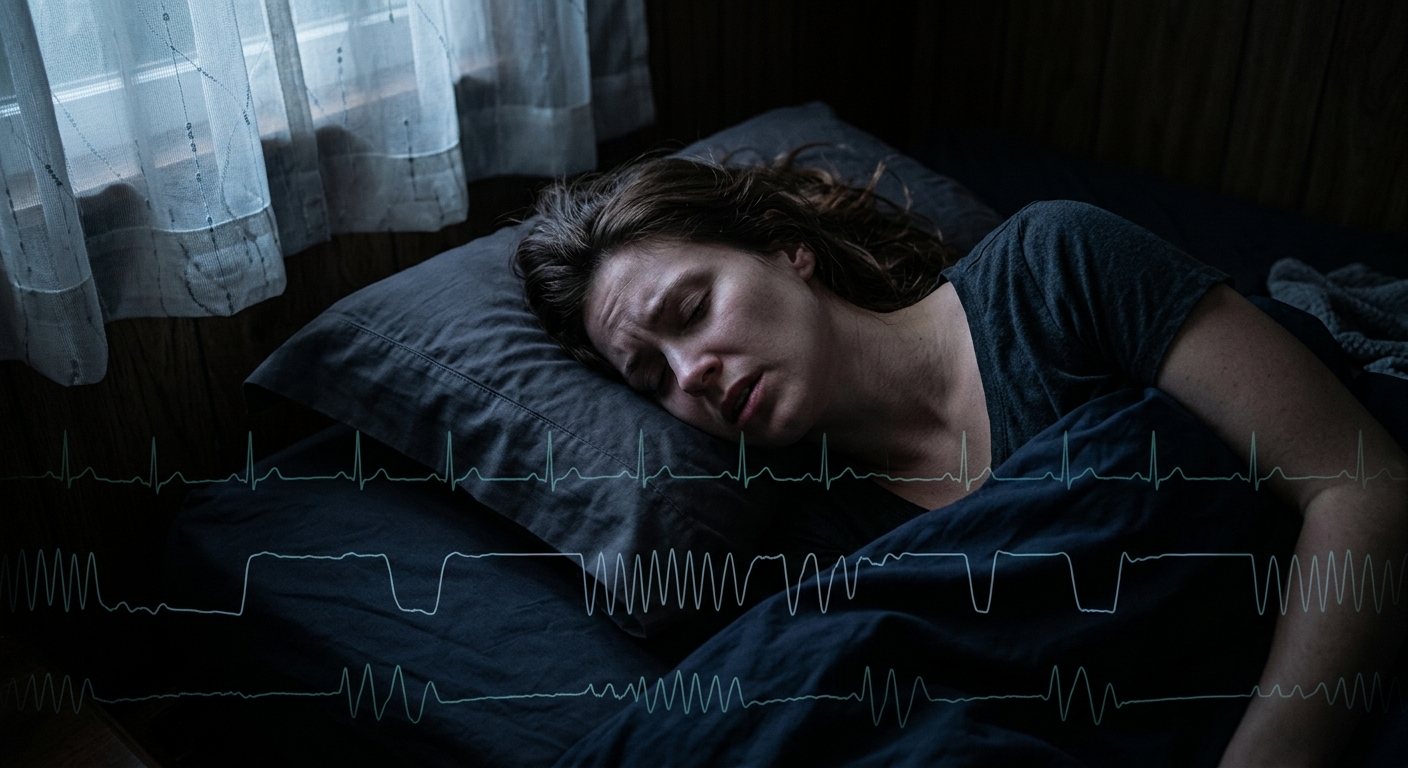
Sleep apnea is more common than most people realize — and most people who have it don't know. The American Academy of Sleep Medicine estimates that roughly 30 million Americans have obstructive sleep apnea, but fewer than 6 million have been diagnosed. That's a massive gap between who has it and who's actually getting help.
If you're waking up exhausted after a full night's sleep, your partner has mentioned that you snore (or stop breathing), or you're falling asleep at your desk by 2pm, sleep apnea could be the reason why. And the frustrating part? You might not remember waking up dozens — or hundreds — of times per night.
Here's how to recognize the signs, what to do about it, and why treating it is non-negotiable for your long-term health.
What Is Sleep Apnea, Exactly?
Sleep apnea is a sleep disorder where your breathing repeatedly stops and starts during the night. Each pause is called an "apneic event," and they can last anywhere from a few seconds to over a minute. Your body eventually wakes itself up enough to restart breathing — but not enough for you to consciously remember it.
There are three main types:
- Obstructive sleep apnea (OSA): The most common type. The muscles in your throat relax too much, causing the airway to narrow or collapse. Your brain detects the drop in oxygen and wakes you briefly so you start breathing again.
- Central sleep apnea (CSA): Less common. Your brain fails to send the right signals to the muscles that control breathing. No physical obstruction — just a communication failure.
- Complex/mixed sleep apnea: A combination of both.
Most people have OSA. That's what this article focuses on.
The 8 Most Common Sleep Apnea Symptoms
1. Loud, Chronic Snoring
Not everyone who snores has sleep apnea, but virtually everyone with OSA snores. The snoring is typically loud enough to disturb a partner in another room, and it often has a distinctive pattern: loud snore → silence → gasping or choking → snoring resumes.
The silence is the apneic event. The gasp is your body fighting to restore airflow.
If someone has told you that you snore loudly and consistently — especially if they've noticed you stop breathing — that's a serious flag.
2. Waking Up Gasping or Choking
Some people with sleep apnea wake themselves up gasping for air. It's startling and uncomfortable. If this has happened to you even once or twice, it's worth taking seriously. It means the apneic events were severe enough to pull you out of sleep completely — and the ones you didn't wake up from were likely more frequent.
3. Excessive Daytime Sleepiness
This is the symptom that sends most people to a doctor. You sleep 7-8 hours, wake up, and still feel like you got nothing. You're drowsy by mid-morning, fighting sleep during afternoon meetings, and crashing on the couch by 7pm.
The reason: sleep apnea fragments your sleep architecture. Every time you stop breathing, your brain shunts out of deep or REM sleep to restore breathing. You might technically spend 8 hours in bed, but your body spends almost none of it in the restorative stages that make you feel rested.
If you're sleeping 8 hours but still tired, sleep apnea is one of the first things to rule out.
4. Morning Headaches
Waking up with a dull headache across the forehead — almost every morning — is a lesser-known but classic sign. The headaches are caused by fluctuating oxygen and carbon dioxide levels during the night. CO2 accumulates when you stop breathing, causing blood vessels to dilate. You wake up with a headache and it usually fades within an hour or two.
If Tylenol before bed is a regular ritual for you, dig deeper.
5. Waking Up with a Dry Mouth or Sore Throat
If you're breathing through your mouth all night — which happens naturally when your nasal airway is restricted or your throat is partially obstructed — you'll wake up with a dry, often sore throat and parched mouth. A glass of water by the bed that's always empty in the morning is a subtle tell.
6. Difficulty Concentrating or Brain Fog
Sleep apnea impairs deep sleep and REM sleep — the stages where memory consolidation, cognitive repair, and emotional processing happen. Chronically interrupted sleep literally changes how your brain functions during the day. You may notice:
- Trouble focusing or making decisions
- Short-term memory lapses
- Feeling mentally "slow" even after enough sleep
- Mood shifts, irritability, or mild depression
People often chalk this up to stress or aging. Often, it's the oxygen.
7. Frequent Nighttime Urination (Nocturia)
This surprises most people. When your airway repeatedly collapses during sleep, your heart responds to the oxygen drop by releasing a hormone (ANP — atrial natriuretic peptide) that signals the kidneys to produce more urine. Result: you wake up to pee 2-3 times per night — not because of your bladder, but because of your airway.
If you're waking up in the middle of the night frequently and blaming hydration, sleep apnea may be the real culprit.
8. High Blood Pressure (Especially If Hard to Control)
Sleep apnea is one of the most common secondary causes of hypertension. Each apneic event triggers a stress response that spikes blood pressure. Do this hundreds of times per night, every night, and your baseline blood pressure starts to creep up permanently. If you're on blood pressure medication and it's not working well, your doctor should be screening you for sleep apnea.
Risk Factors: Who's Most Likely to Have It
While sleep apnea can affect anyone, certain factors significantly increase risk:
Physical:
- Excess weight (especially around the neck — a collar size over 17" for men, 15" for women)
- Large tonsils or adenoids
- Recessed chin or small jaw
- Narrow airway
- Nasal congestion or deviated septum
Lifestyle:
- Alcohol consumption (relaxes throat muscles further — see our article on alcohol and sleep)
- Smoking
- Sedative or sleeping pill use
Demographics:
- Men are 2-3x more likely than women (though women's risk rises significantly after menopause)
- Age 40+ (muscle tone decreases with age, including in the throat)
- Family history
Sleep position:
- Back sleeping dramatically worsens OSA — gravity causes the tongue and soft tissue to collapse backward. This is why many mild OSA cases can be managed partly through positional therapy.
The Problem with Self-Diagnosing (and Not Diagnosing)
Sleep apnea isn't something you can fully assess yourself. The gold standard diagnosis is a polysomnography (PSG) sleep study — either in a lab or via a home sleep apnea test (HSAT). These measure your Apnea-Hypopnea Index (AHI): the number of breathing disruptions per hour.
- Mild: 5-15 events/hour
- Moderate: 15-30 events/hour
- Severe: 30+ events/hour
Some wearables (like Oura Ring and newer Apple Watch models) are starting to flag potential sleep apnea, but they're screening tools, not diagnostic ones. If a device flags a concern, treat it seriously and follow up with a physician.
Why you shouldn't ignore it:
Untreated sleep apnea isn't just a "bad sleep" problem. It's linked to:
- 2-3x higher risk of cardiovascular disease
- Increased stroke risk
- Type 2 diabetes
- Depression and anxiety
- Cognitive decline
- Car accident risk (drowsy driving kills ~6,000 people/year in the US)
This is a medical condition. Treat it like one.
What to Do If You Think You Have Sleep Apnea
Step 1: Track Your Symptoms
Keep a sleep log for 1-2 weeks. Note: what time you went to bed, how rested you feel in the morning (1-10), afternoon energy, headaches, trips to the bathroom at night. If you have a partner, ask them to note snoring and any observed breathing pauses.
Step 2: Talk to Your Doctor
Bring your symptom log. Your primary care doctor can refer you to a sleep specialist or order a home sleep test. Home tests have become much more accessible — many insurance plans cover them, and direct-to-consumer options like Lofta or WatchPAT are available without a referral.
Step 3: Understand Your Treatment Options
If you're diagnosed, the good news is treatment works — and it often works dramatically. Most people with moderate-to-severe OSA feel like different humans within weeks of starting CPAP therapy.
Treatment options include:
- CPAP (Continuous Positive Airway Pressure): The first-line treatment. A machine delivers pressurized air through a mask to keep your airway open. Modern CPAP machines are quieter and more comfortable than they used to be.
- BiPAP: Similar to CPAP but with different pressure for inhaling and exhaling. Used for more severe cases or those who can't tolerate CPAP.
- Oral appliance therapy: A custom mouthguard that repositions your jaw forward to keep the airway open. Effective for mild-to-moderate OSA, especially for back sleepers.
- Positional therapy: For mild positional OSA (where symptoms are mainly on your back), training yourself to sleep on your side — or using a positional device — can dramatically reduce events.
- Surgical options: For structural issues like enlarged tonsils or a deviated septum, various surgeries exist. Less common first-line but effective in the right cases.
- Weight loss: For weight-related OSA, losing even 10% of body weight can reduce AHI significantly.
Optimizing Your Sleep Environment
Regardless of whether you're pursuing diagnosis, certain environmental changes can reduce airway obstruction severity:
Elevating your head. Sleeping with your head elevated 30-45 degrees reduces how much soft tissue collapses into the airway. An adjustable bed base makes this effortless — you can dial in the exact elevation that works best. The Airpedic adjustable mattress system→ lets you independently adjust head elevation and firmness, which can meaningfully reduce snoring and mild positional apnea while you pursue formal diagnosis and treatment.
Side sleeping. If you're a back sleeper with OSA, transitioning to side sleeping is one of the highest-leverage changes you can make. A body pillow or specialized positional pillow can help maintain the position through the night.
Avoiding alcohol within 3 hours of bed. Alcohol relaxes the pharyngeal muscles that keep your airway open. Even moderate drinking measurably worsens OSA severity.
Treating nasal congestion. A blocked nose forces mouth breathing, which worsens OSA. Nasal strips, saline rinse, or addressing underlying allergies can help.
Sleep Apnea vs. Other Sleep Disorders
A few things worth distinguishing:
Sleep apnea vs. insomnia: Insomnia is difficulty falling or staying asleep. Sleep apnea is interrupted sleep quality despite adequate time in bed. They can coexist — in fact, untreated OSA is a common cause of what looks like insomnia (frequent nighttime awakenings).
Sleep apnea vs. upper airway resistance syndrome (UARS): UARS is a milder version where the airway narrows but doesn't fully collapse. AHI may be normal, but you're still arousng from sleep to breathe harder. Often misdiagnosed as insomnia or idiopathic hypersomnia.
Sleep apnea vs. hypersomnia: If you're always sleepy no matter how much you sleep and have no other symptoms, other conditions like idiopathic hypersomnia, narcolepsy, or thyroid disorders should be ruled out.
The Bottom Line
Sleep apnea is one of the most underdiagnosed conditions in the country. If you're snoring, waking up tired, gasping in the night, or feeling foggy all day — these aren't just quirks of your sleep. They're warning signs that your body isn't getting oxygen the way it needs to.
Get tested. Treatment works. And in the meantime, reset your sleep routine to maximize whatever quality sleep you can get while you pursue a diagnosis.
If your sleep log shows enough time in bed but you still feel exhausted, compare it with the Sleep Debt Calculator and treat snoring or gasping as a medical red flag.
Frequently Asked Questions
What are the most common symptoms of sleep apnea?+
The most common symptoms include loud snoring, waking up gasping or choking, excessive daytime sleepiness despite adequate sleep time, morning headaches, dry mouth or sore throat upon waking, and difficulty concentrating or brain fog throughout the day.
Can you have sleep apnea without snoring?+
Yes, though it is less common. Central sleep apnea (where the brain fails to send proper breathing signals) often occurs without snoring. Some people with obstructive sleep apnea also have minimal snoring, especially if they are lighter-weight or primarily side sleepers.
How is sleep apnea diagnosed?+
Sleep apnea is diagnosed through a sleep study (polysomnography) either in a sleep lab or at home using a home sleep apnea test (HSAT). These tests measure your Apnea-Hypopnea Index (AHI) — the number of breathing disruptions per hour. A result of 5 or more events per hour with symptoms confirms a diagnosis.
Can sleep apnea go away on its own?+
Mild positional sleep apnea can improve significantly with lifestyle changes like weight loss, side sleeping, and avoiding alcohol before bed. However, moderate to severe sleep apnea typically requires treatment (CPAP, oral appliance, or surgery) and does not resolve on its own.
What happens if sleep apnea goes untreated?+
Untreated sleep apnea significantly increases the risk of cardiovascular disease, stroke, type 2 diabetes, depression, and cognitive decline. It also causes dangerous daytime drowsiness that raises accident risk. Sleep apnea is a medical condition that requires proper diagnosis and treatment.
Keep Reading
Sleep Smarter Editorial Team
Our editorial team researches and writes evidence-based sleep content grounded in peer-reviewed science. All articles reference established sleep research from sources including the NIH, AASM, and Sleep Foundation.