Why You Wake Up at 3AM: The Cortisol and Blood Sugar Explanation
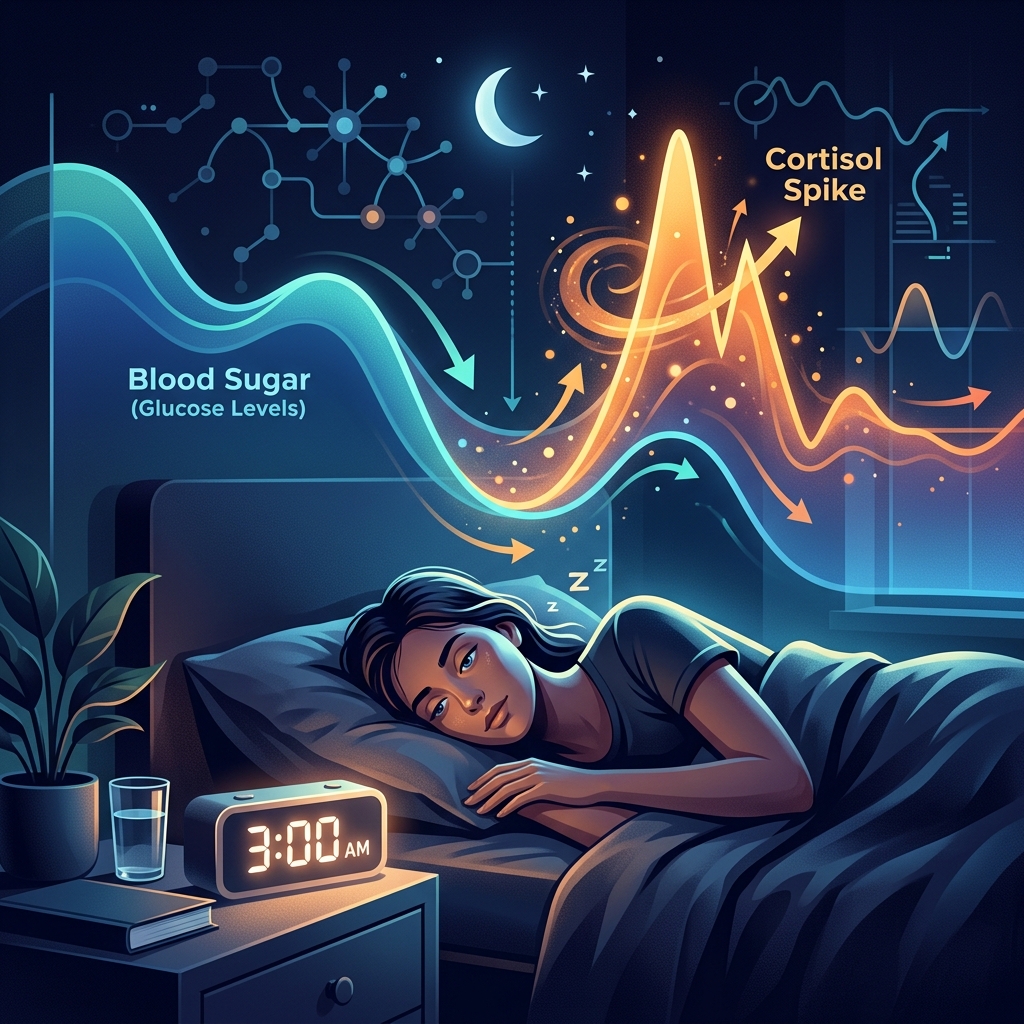
It happens like clockwork. You fall asleep fine, drift off without drama — and then, somewhere between 2:45 and 3:15 in the morning, your eyes snap open. No alarm. No noise. Just wide awake, heart thumping slightly, mind already starting to spin. You lie there willing yourself back to sleep. An hour passes. Maybe two. By the time your alarm goes off, you feel worse than if you'd never slept at all. If this sounds familiar, you're not broken — and it's not random. There's a precise physiological reason this keeps happening at 3AM specifically, and once you understand it, fixing it becomes a lot more straightforward than you'd expect.
What's Actually Happening in Your Body at 3AM
Your body runs on a hormonal schedule whether you're conscious of it or not. During the first half of the night — roughly 10PM to 2AM — your system is dominated by deep, restorative sleep. Growth hormone surges. Tissue repairs. Brain waste clears. This is the good stuff.
But around 3AM, a biological shift happens that most sleep articles completely ignore: your body starts its morning preparation sequence — hours before you actually need to wake up.
Cortisol, often called the "stress hormone," isn't just a response to external pressure. It follows a natural 24-hour rhythm called the cortisol awakening response (CAR). Production begins ramping up in the early hours of the morning, peaking around 8–9AM to give you that natural alertness for the day ahead. This is normal and healthy.
The problem? For a significant portion of the population — particularly people under chronic stress, women in perimenopause, and anyone whose nervous system is chronically dysregulated — this cortisol ramp-up starts too early or too aggressively. The spike that's supposed to ease you gently toward waking instead fires at 3AM, pulling you straight out of sleep.
A 2020 review published in Sleep Medicine Reviews confirmed that hypothalamic-pituitary-adrenal (HPA) axis dysregulation — the system that controls cortisol — is one of the most consistent physiological findings in people with chronic middle-of-the-night insomnia. Your body isn't malfunctioning. It's misfiring a perfectly normal system at the wrong time.
The Blood Sugar Connection Nobody Mentions
Here's where it gets interesting — and where most "why do I wake up at 3AM" articles fall short.
Cortisol doesn't operate in isolation. It's tightly linked to blood sugar regulation. When your blood glucose drops too low overnight (a state called nocturnal hypoglycemia), your body treats it as a metabolic emergency. The response? Release cortisol and adrenaline to trigger the liver to dump glucose back into the bloodstream.
In other words: a blood sugar crash at 3AM triggers the exact same hormonal response as a stress event. Your body wakes you up to prevent what it perceives as a crisis — even if the "crisis" is just the consequence of what you ate for dinner six hours ago.
Research backs this up. A study in Diabetes Care found that even subclinical nocturnal glucose dips — drops that don't register as full hypoglycemia — are enough to trigger arousal from sleep. The overnight blood sugar dip is worst when dinner was high in refined carbohydrates, alcohol was consumed in the evening (alcohol blocks the liver's glucose production, making the crash deeper), or the last meal was eaten too early, leaving a long gap before cortisol starts rising.
This explains why that glass of wine before bed — despite feeling relaxing — reliably leads to a 3AM wakeup. Alcohol suppresses REM sleep and depresses blood sugar production. You pay for the sedation four hours later.
The Chronic Stress Factor: When Your Nervous System Never Clocks Out
A pharmacist on Reddit put it better than most clinical papers do: the common thread in patients who are "always tired" is that their body never really switches off. The nervous system stays in low-grade sympathetic activation — not full fight-or-flight, but never truly in the parasympathetic "rest and digest" mode that deep sleep requires.
When you're chronically stressed, your baseline cortisol is already elevated going into the night. Your HPA axis is sensitized. The natural 3AM cortisol ramp becomes exaggerated — more cortisol than necessary, earlier than it should arrive. You don't just stir; you wake up with a racing heart and a brain that immediately starts cataloguing everything you haven't done.
This pattern is especially pronounced in perimenopause. As progesterone drops with age, its natural calming effect on the nervous system diminishes. Progesterone acts on GABA receptors in the brain — the same receptors that benzodiazepines target. Less progesterone means less of that natural brake on the cortisol response. The r/Perimenopause community has hundreds of threads about this exact phenomenon: waking reliably at 2–3AM, sometimes with night sweats, sometimes without — just awake, alert, and exhausted.
Other Triggers That Make It Worse
The cortisol-blood sugar mechanism is the root cause for most people, but several other factors can amplify it or create an almost identical wakeup pattern — and in many cases, multiple factors stack together, which is why the wakeup can feel so persistent even when you "fix" one thing:
Sleep apnea. Each time breathing pauses, oxygen drops and cortisol spikes as the body scrambles to rouse you enough to breathe again. This can happen dozens or even hundreds of times per night — the person often has no memory of any single event, but the cumulative cortisol load is enormous. If you snore, wake up with headaches, feel unrefreshed despite adequate hours, or your partner has noticed your breathing stops, get a sleep study before anything else. No supplement or mattress will fix obstructive apnea.
Blue light suppressing melatonin. Melatonin doesn't just help you fall asleep — it counteracts cortisol. If blue light from screens has blunted your melatonin production in the evening, the cortisol/melatonin balance shifts unfavorably right when you need it most.
Magnesium deficiency. An estimated 48% of Americans don't get adequate magnesium from diet. Magnesium is a co-factor in over 300 enzymatic reactions, including the regulation of the HPA axis and the calming of the NMDA receptors that keep the nervous system excitable. Low magnesium = overactive stress response = worse 3AM cortisol spikes. This is why the supplement appears in so many Reddit threads about night waking — for a lot of people, it genuinely helps.
Temperature. Core body temperature needs to drop 1–2°F for the body to enter and maintain deep sleep. This cooling process is continuous — if your environment starts warming you back up in the second half of the night, your sleep architecture fragments. This naturally happens right around 3AM anyway, when your body shifts from slow-wave deep sleep toward lighter REM cycles. Bedding that traps heat turns a minor biological transition into a full wakeup.
The Fix Protocol: What to Do Tonight and Long-Term
Understanding the mechanism is one thing. Actually fixing it is another. Here's what the evidence supports.
1. Stabilize Blood Sugar Before Bed
Skip the alcohol. If you want to have a drink, finish it with dinner rather than after. For the blood sugar angle specifically, a small protein-fat snack before bed — think a tablespoon of almond butter or a few walnuts — can blunt the nocturnal glucose dip without causing an insulin spike that crashes you harder. Avoid high-glycemic carbs after 8PM.
Also time your last meal appropriately. A 4–5 hour gap between dinner and bedtime is reasonable. Going to bed within 2 hours of a large carb-heavy meal tends to produce a blood sugar spike, then a steeper drop later.
2. Add Magnesium Glycinate Before Bed
Magnesium glycinate is the form with the best absorption and the gentlest gastrointestinal profile. The glycine component has its own sleep-supporting properties — it's been shown in studies to lower core body temperature slightly and improve sleep quality scores. The magnesium component helps dampen the HPA axis overactivation that drives the early cortisol spike.
A dose of 200–400mg taken 30–60 minutes before bed is what most sleep researchers work with. Look for a high-quality magnesium glycinate supplement on Amazon — check that the elemental magnesium is at least 100mg per serving and there are no unnecessary fillers.
3. Cool Your Sleep Environment
Your body needs to drop in temperature to sustain the second half of the night. If you're sleeping hot — whether from bedding, room temperature, or both — you're biologically fighting against deep sleep maintenance right at the window when you're most vulnerable to waking.
The goal is a bedroom between 65–68°F. Equally important is your bedding. Conventional synthetic comforters trap body heat; the result is a warming trend across the night that fragments sleep without you consciously registering why.
The Promeed CoolRest comforter→ was designed specifically for this — the CoolRest line uses temperature-regulating materials to dissipate body heat rather than trap it, so your core temperature keeps dropping instead of plateauing or climbing in the early morning hours. It's OEKO-TEX certified and has a genuine cooling effect rather than just marketing language.
4. Down-Regulate Your Nervous System Before Bed
If your cortisol profile is genuinely dysregulated, you need to give your HPA axis a reason to calm down before you sleep — not just hope it does on its own. Two evidence-backed options:
NSDR (Non-Sleep Deep Rest): A 10–20 minute protocol developed by neuroscientist Andrew Huberman that uses controlled breathing and body scanning to shift the nervous system from sympathetic to parasympathetic. Free on YouTube, takes 15 minutes, measurably reduces cortisol. Make it a non-negotiable.
Consistent sleep and wake times. The single most powerful input you can give your circadian system is timing consistency. An irregular schedule — sleeping in on weekends, staying up late some nights, early alarms on others — keeps cortisol timing erratic and prevents the HPA axis from settling into a stable rhythm. Anchor your wake time first, even on weekends, and your body's natural hormone scheduling tightens up over 1–2 weeks. The effect compounds: the more consistent your wake time, the more predictable and appropriate your cortisol ramp becomes — and the less likely it is to fire at 3AM instead of 7.
If you're waking at 3AM and lying there calculating how many hours you have left before your alarm, it's worth treating this systematically rather than just hoping it resolves. The mechanisms are well understood. The interventions aren't complicated. But they do need to happen consistently.
Ready to fix your sleep more comprehensively? The 7-Day Sleep Reset Protocol walks you through the complete framework — sleep timing, nutrition, environment, and nervous system regulation — in a structured 7-day sequence. It's the fastest way to stop treating symptoms and start fixing causes.
Frequently Asked Questions
Why do I wake up at exactly 3AM every night?+
Your body starts its natural cortisol awakening response hours before you need to wake up. For many people — especially those under chronic stress — this cortisol ramp fires too early (around 3AM) instead of at 6-7AM, pulling you out of sleep. Blood sugar drops from dinner can compound the effect by triggering adrenaline release at the same time.
Can blood sugar cause you to wake up at 3AM?+
Yes. Nocturnal hypoglycemia — when blood glucose drops too low overnight — triggers your body to release cortisol and adrenaline to stabilize it. This hormonal rescue response can wake you from sleep. Eating high-carb dinners, drinking alcohol in the evening, or going to bed long after your last meal all increase this risk.
Does alcohol cause 3AM wake-ups?+
Reliably. Alcohol initially suppresses your nervous system and helps you fall asleep, but it blocks your liver's normal overnight glucose production. Blood sugar drops harder and faster, triggering an adrenaline and cortisol response around 3-4AM. Alcohol also suppresses REM sleep, leaving you in lighter sleep stages when the hormonal spike hits.
What is the best supplement for 3AM wake-ups?+
Magnesium glycinate (200-400mg before bed) is the most evidence-backed option. Magnesium helps regulate the HPA axis that controls cortisol, calms overactive NMDA receptors, and the glycine component slightly lowers core body temperature — all three mechanisms reduce the likelihood of an early-morning cortisol spike waking you up.
How do I stop waking up at 3AM?+
Address the root causes systematically: stabilize blood sugar with a small protein-fat snack before bed and avoid alcohol, take magnesium glycinate 30-60 minutes before sleep, keep your bedroom at 65-68°F with temperature-regulating bedding, and practice NSDR or box breathing to down-regulate your nervous system before bed. Anchor your wake time on a consistent schedule — this is the single most powerful way to normalize your cortisol rhythm over 1-2 weeks.
Keep Reading
Sleep Smarter Editorial Team
Our editorial team researches and writes evidence-based sleep content grounded in peer-reviewed science. All articles reference established sleep research from sources including the NIH, AASM, and Sleep Foundation.