5 Signs Your Sleep Tracker Is Hurting More Than Helping
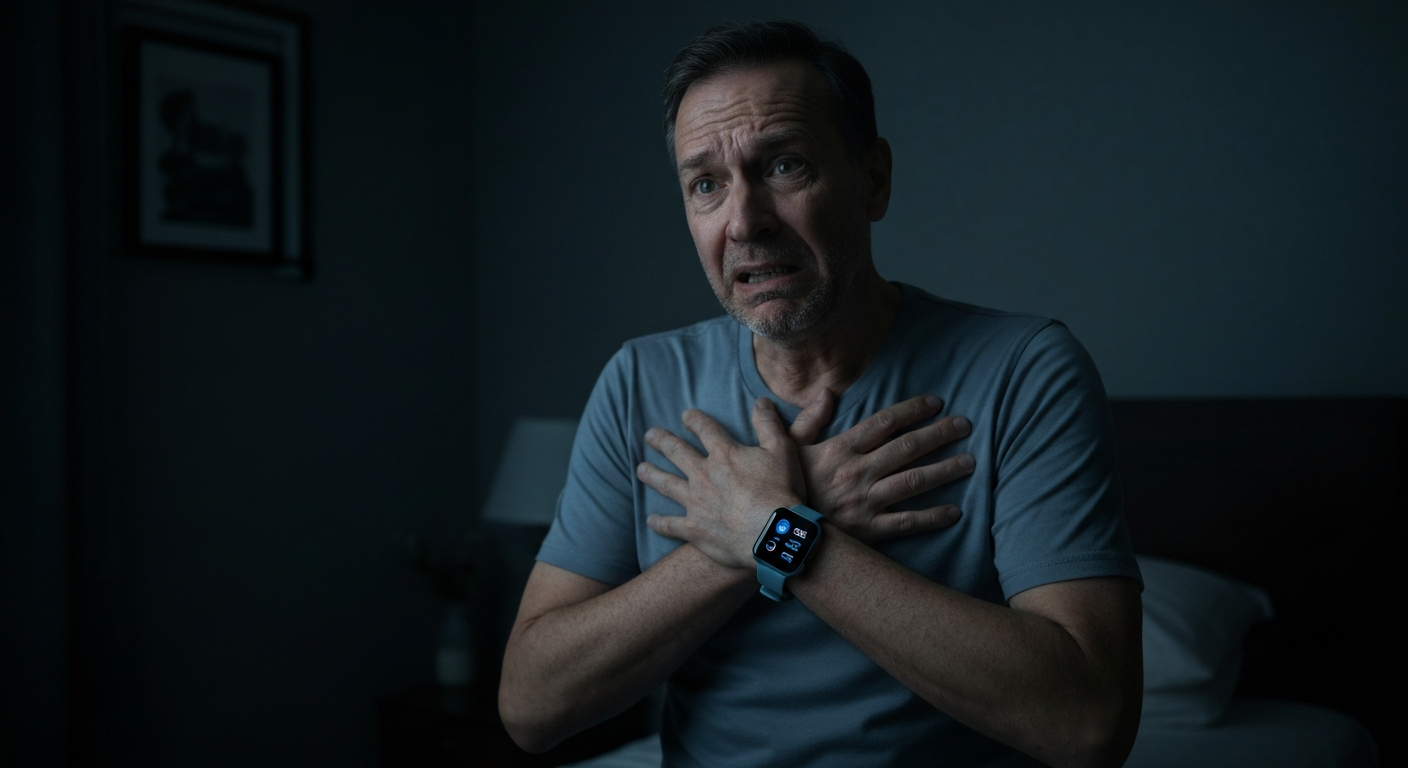
You bought the ring, the watch, or the band to sleep better. You did everything right. But somewhere between obsessing over your REM percentages and rage-reading your "below average" deep sleep score at 6 a.m., something shifted. The data that was supposed to help you sleep started keeping you up instead. If that sounds familiar, you may be dealing with orthosomnia — and you're far from alone.
What Is Orthosomnia?
Orthosomnia is a relatively new clinical term, first coined in a 2017 paper published in the Journal of Clinical Sleep Medicine by researchers at Rush University Medical Center. The name combines the Greek root ortho (correct or straight) with somnia (sleep) — a wry nod to the idea that people are so determined to achieve "correct" sleep that they're making their sleep worse in the process.
The researchers described patients who arrived at their sleep clinic not with traditional insomnia complaints, but with a new kind of anxiety: preoccupation with achieving perfect sleep data on their consumer sleep trackers. These patients were canceling evening plans, skipping early morning workouts, and developing clinical-level anxiety around their nightly scores — all in pursuit of metrics that, in many cases, weren't even accurate.
This wasn't an isolated phenomenon. A 2023 study in Sleep Medicine found that among wearable device users, higher engagement with sleep tracking data was significantly associated with greater sleep-related anxiety, poorer subjective sleep quality, and increased daytime fatigue — even when objective sleep metrics showed no change. In other words, people felt worse because they were tracking, not despite it.
How Widespread Is the Problem?
The numbers have only grown as wearable adoption has exploded. By 2025, the consumer sleep technology market had exceeded $80 billion globally, with Oura Ring, WHOOP, Fitbit, Apple Watch, and Garmin devices collectively tracking the sleep of tens of millions of people every night. Research published in npj Digital Medicine estimates that roughly 15–20% of regular sleep tracker users develop some degree of sleep-related anxiety directly attributable to data monitoring.
Reddit's r/sleep community puts a human face on those percentages. In a thread from just last week titled "Is sleep tracking technology actually making sleep anxiety worse?", hundreds of commenters shared variations of the same story: they started tracking to improve their sleep, saw numbers they didn't like, became anxious about those numbers, slept worse, saw even worse numbers the next night, and found themselves trapped in a feedback loop with no clear exit. "I was obsessed with the data," one commenter wrote. "Still sleeping terribly, just now with evidence."
That feedback loop is physiologically real, not just psychological. Anxiety activates the sympathetic nervous system — the "fight or flight" response — which elevates cortisol, increases core body temperature, and makes transitioning into slow-wave sleep genuinely harder. Checking your score in the morning and finding it low creates anticipatory anxiety the following evening. That anxiety elevates physiological arousal at bedtime. Which produces worse sleep. Which produces a worse score. Repeat.
5 Signs Your Sleep Tracker Is Hurting More Than Helping
Not everyone who tracks their sleep develops orthosomnia. For many people, especially those managing specific health conditions or optimizing athletic performance, sleep data is genuinely useful. But there are clear warning signs that the tracker has crossed from tool to problem.
1. You feel anxious before bed about your upcoming score. If you're lying down and already dreading tomorrow's readiness number, your device has become a source of pre-sleep stress rather than post-sleep information. Bedtime anxiety is one of the most reliable predictors of poor sleep quality — and if the device is generating it, the math doesn't work in your favor.
2. You check your sleep data before doing anything else in the morning. For most people, this is now habitual. But if the number you see visibly changes your mood, energy, or confidence for the day — if a "poor" score makes you feel tired even when you felt fine waking up — you're experiencing a documented placebo-nocebo effect that research has repeatedly confirmed. A 2019 study published in the Journal of Experimental Psychology found that participants told they'd slept poorly (regardless of actual sleep quality) performed measurably worse on cognitive tasks afterward. Your score is influencing your experience of your own body.
3. You've changed behaviors specifically to chase a better score — and it hasn't helped. Going to bed earlier when you're not tired, avoiding exercise because it "hurts your recovery score," restricting fluids because nocturia tanks your restlessness metric — these are behavioral changes driven by device logic rather than your own body's signals. When the device's model of good sleep diverges from your actual physiology, optimizing for the device makes you worse off.
4. Your subjective sleep feels worse despite your data showing improvement. This is the most diagnostic sign. Consumer sleep trackers are notoriously inaccurate at identifying specific sleep stages. A 2023 independent validation study published in Sleep found that even top-tier consumer wearables misclassify sleep stages at rates of 30–50% compared to polysomnography (the clinical gold standard). If your tracker says you got great deep sleep but you feel wrecked, believe your body. If you're ignoring your body's signals to chase better numbers, you've inverted the correct hierarchy.
5. You feel relieved — or disappointed — reading your sleep report, but not neutral. Emotional reactivity to sleep data is a key clinical marker for orthosomnia. Healthy tracking looks like mild curiosity. Unhealthy tracking looks like a performance review you didn't choose to attend.
When Sleep Trackers Do Work
Fairness requires saying this clearly: sleep trackers aren't universally harmful, and the research on them isn't uniformly negative.
For people with sleep apnea who've been prescribed a CPAP device, integration with apps like ResMed can objectively confirm treatment compliance and improvement. For shift workers and frequent flyers managing circadian disruption, longitudinal trend data can surface patterns that are genuinely hard to notice otherwise — consistent sleep debt accumulation, the real impact of a late flight, or how alcohol is affecting architecture even when it feels like it helps you fall asleep faster. For athletes in structured periodization, recovery tracking has legitimate evidence behind it when used as one signal among many rather than a single arbiter of readiness.
The crucial distinction is purpose. A tracker used to identify broad, multi-week trends is a different instrument than one used to judge each individual night. The granular, night-by-night obsession is where orthosomnia lives. The bird's-eye-view is where useful data lives.
If you're not currently in a specific performance or medical context, and you're someone who struggles with sleep anxiety, chronic insomnia, or a tendency toward perfectionism about health metrics, the evidence suggests you're probably better off not tracking — at least for now.
What to Focus On Instead
If you decide to step away from sleep tracking, or if you want to address the anxiety that's developed around it, the research points clearly toward a different set of levers. None of them involve a score.
Sleep environment over sleep metrics. The conditions in your sleeping environment have measurable, reproducible effects on sleep architecture — effects that show up in actual polysomnography, not just in consumer device estimates. Room temperature is the most powerful single variable: a core body temperature drop of 1–3°F is required to initiate and maintain deep sleep, and a room kept between 65–68°F (18–20°C) reliably supports that process. Noise and light control come next. None of these require a tracker. They require a cool, dark, quiet room.
The physical comfort layer matters more than people expect. Your sleep surface and bedding play a larger role in sleep continuity than most people account for. Thermoregulation issues — waking up overheated or uncomfortably sweaty — are among the most common causes of sleep fragmentation. Breathable bedding materials, particularly natural silk or high-quality cotton, have measurably better moisture-wicking properties than synthetic alternatives. If you find yourself waking up restless and warm, this is one of the easiest environmental variables to address. Promeed's silk pillowcases→ are a well-reviewed option in this category — the temperature regulation and tactile quality are meaningfully different from most pillowcases, which matters more on nights when your nervous system is already primed toward arousal.
Address the biochemistry, not the score. If anxiety is a significant driver of your sleep problems — which it almost certainly is if orthosomnia has developed — there's one supplement category with robust, consistent evidence behind it: magnesium. Magnesium glycinate specifically (not oxide, which has poor bioavailability) supports GABAergic neurotransmission — the same signaling pathway targeted by prescription sleep aids, but without dependency risk. Multiple randomized controlled trials have found it reduces sleep onset latency and nighttime cortisol in magnesium-insufficient adults, which — given modern dietary patterns — is most adults. A dose of 200–400mg taken 30–60 minutes before bed is the range used in most research. Doctor's Best High Absorption Magnesium Glycinate is a frequently recommended formulation with strong bioavailability — look for at least 100mg of elemental magnesium per serving.
Rebuild your relationship with sleep as a passive process. One of the core CBT-I (Cognitive Behavioral Therapy for Insomnia) insights is that sleep is not a performance. Effort is the enemy of sleep onset. The moment you start trying to sleep — monitoring yourself, evaluating your progress, worrying about the outcome — you activate exactly the cognitive arousal that prevents sleep from happening. Sleep trackers, at their worst, gamify a process that cannot be won by playing harder. Treating sleep as something that happens to you when conditions are right, rather than something you achieve through effort, is a fundamental reframe that orthosomnia recovery almost always requires.
Ready to reset your relationship with sleep entirely? Our 7-Day Sleep Reset Protocol walks you through the specific environmental, behavioral, and mindset changes that the evidence actually supports — without a single sleep score in sight. It's the framework we'd build if we were designing a sleep improvement program from scratch, for someone who'd already tried everything that didn't work.
The Bigger Picture
It's worth stepping back and asking why orthosomnia emerged when it did — specifically, why the era of quantified self has produced a new clinical sleep disorder rather than a generation of well-rested data optimizers.
The answer, most sleep researchers agree, is that sleep is uniquely sensitive to the act of observation. Unlike fitness, where monitoring steps or workouts tends to increase motivation and outcome, sleep monitoring creates a performance context around a biological process that actively resists performance pressure. We don't consciously control sleep. We create conditions for it. The wearable industry, which profits from engagement and anxiety in roughly equal measure, has been slow to reckon with this distinction.
The most honest thing an Oura Ring could do — and to their credit, their app has moved modestly in this direction — is to tell you to stop looking at it. The second most honest thing is to remind you that its sleep stage data has a margin of error large enough to invalidate most of the micro-optimizations users make based on it.
Consumer sleep tracking isn't inherently bad. Used with appropriate skepticism, at the right zoom level, in the right context, it can be genuinely informative. But if you bought a tracker because you were already struggling with sleep — if you hoped the data would tell you what was wrong — there's a reasonable chance it made things worse rather than better. Recognizing that isn't failure. It's data of a more useful kind.
Put the device away for two weeks. Make your room colder. Get better bedding. Take your magnesium. Stop trying. See what happens.
Frequently Asked Questions
What is orthosomnia?+
Orthosomnia is a clinical term for anxiety caused by obsessing over consumer sleep tracker data. People become so focused on achieving perfect sleep scores that the stress itself worsens their sleep — creating a self-reinforcing cycle.
How do I know if my sleep tracker is causing anxiety?+
Key signs include feeling anxious before bed about your upcoming score, checking sleep data first thing every morning, noticing your mood changes based on the number you see, and finding that your subjective sleep feels worse even when your data looks good.
Are consumer sleep trackers actually accurate?+
Not as accurate as most people assume. Independent validation studies have found that top consumer wearables misclassify sleep stages at rates of 30–50% compared to polysomnography (clinical sleep testing). They are better for identifying broad multi-week trends than for judging individual nights.
Should I stop using my sleep tracker?+
If you have developed anxiety around your sleep scores, a 2-week tracking break is often recommended. Focus instead on environmental factors — room temperature (65–68°F), darkness, and quiet — which have stronger evidence behind them than any nightly score.
What supplements help with sleep anxiety caused by tracking?+
Magnesium glycinate (200–400mg taken 30–60 minutes before bed) has the strongest evidence for reducing sleep-onset anxiety and nighttime cortisol. It supports GABAergic neurotransmission without the dependency risks associated with prescription sleep aids.
Keep Reading
Sleep Smarter Editorial Team
Our editorial team researches and writes evidence-based sleep content grounded in peer-reviewed science. All articles reference established sleep research from sources including the NIH, AASM, and Sleep Foundation.