How to Fall Asleep Fast: 10 Science-Backed Methods That Actually Work
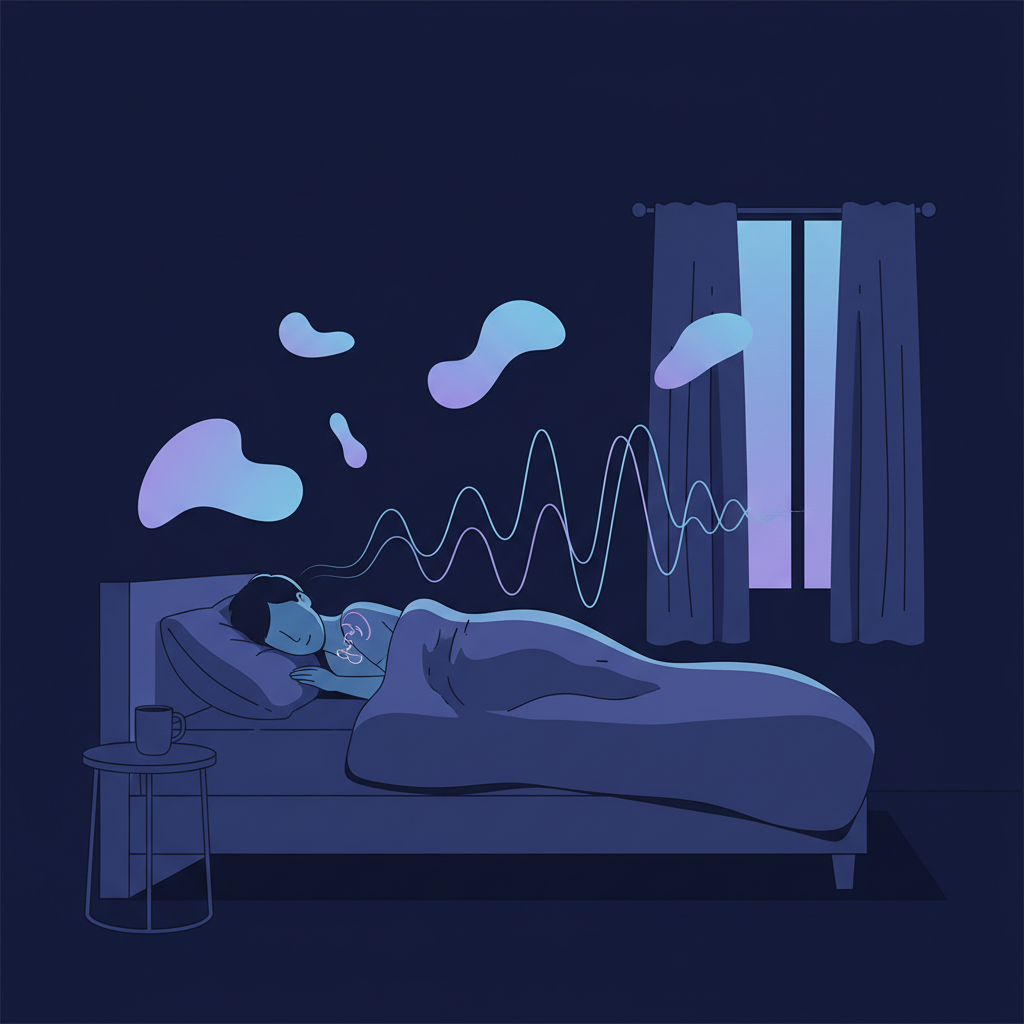
You're lying in bed. You're tired. The room is dark. And you've been awake for 47 minutes, watching the clock.
If this happens regularly, you're not alone — research shows the average adult takes about 20 minutes to fall asleep, but millions of people spend 45 minutes or more just trying. Over the course of a year, that's 270+ hours of ceiling-staring.
The good news: falling asleep faster is a trainable skill, not a genetic lottery. There are specific, research-backed techniques that lower arousal, calm your nervous system, and signal your brain that it's time to shut down. Most of them take under 5 minutes to learn.
Here's what actually works — and the science behind why.
Why You Can't Fall Asleep (The Real Problem)
Before the solutions, the mechanism. Most people who struggle to fall asleep aren't dealing with a sleep problem — they're dealing with an arousal problem. Their nervous system is still in active mode when it should be downshifting.
The culprits are usually one or more of these:
- Elevated cortisol at night (stress hormones that spike your alertness)
- Racing thoughts (mental chatter that keeps your brain occupied)
- Poor sleep pressure buildup (you didn't accumulate enough adenosine during the day)
- Disrupted circadian timing (your body clock isn't aligned with when you're trying to sleep)
- Sleep performance anxiety — the harder you try to sleep, the worse it gets
Understanding which of these applies to you helps you pick the right tool. But several of the methods below address multiple causes at once.
10 Methods to Fall Asleep Faster
1. The 4-7-8 Breathing Technique
Developed by Dr. Andrew Weil based on ancient pranayama breathing, the 4-7-8 method is one of the fastest ways to activate your parasympathetic nervous system — the "rest and digest" mode that your body needs to sleep.
How to do it:
- Exhale completely through your mouth
- Close your mouth and inhale quietly through your nose for 4 seconds
- Hold your breath for 7 seconds
- Exhale completely through your mouth for 8 seconds
- That's one cycle. Repeat 3–4 times
The extended exhale is the key. A longer exhale relative to inhale activates the vagal nerve, which directly signals the heart and nervous system to slow down. Some people fall asleep during the third or fourth cycle.
2. Use Paradoxical Intention
This sounds backwards, but it's backed by clinical research: try to stay awake instead of trying to fall asleep.
A 2003 study in Behavioural and Cognitive Psychotherapy found that insomnia patients told to try to stay awake (without using electronics or getting up) fell asleep faster than those who tried to sleep. Why? Because trying to sleep creates performance pressure, which triggers a cortisol spike — exactly the opposite of what you need.
How to do it: Lie in the dark with your eyes open. Tell yourself your only job is to rest, not to sleep. Actively resist sleep without tensing up. Most people are asleep within 10–15 minutes.
This approach also works as a long-term treatment for sleep anxiety, where the fear of not sleeping is itself the main barrier.
3. Progressive Muscle Relaxation (PMR)
Progressive Muscle Relaxation works by systematically tensing and then releasing muscle groups throughout your body. The release creates a wave of physical relaxation that's hard to replicate with willpower alone — and gives your mind a physical task to focus on instead of racing thoughts.
How to do it:
- Start with your feet: tense the muscles tightly for 5 seconds, then release
- Move upward — calves, thighs, abdomen, hands, arms, shoulders, face
- With each release, notice the difference between tension and relaxation
- By the time you reach your face, most people are significantly more relaxed
This technique is particularly effective if muscle tension or physical restlessness keeps you awake. It's also a foundational tool in Cognitive Behavioral Therapy for Insomnia (CBT-I) — the gold-standard clinical treatment.
4. Cool Your Room to 65–68°F
Your body temperature needs to drop 1–3°F to initiate and maintain sleep. This isn't optional — it's how the biology works. When your environment is too warm, your body can't make this drop efficiently, and sleep onset is delayed.
The optimal bedroom temperature for most adults is 65–68°F (18–20°C). At this temperature, your body's radiative cooling mechanism (releasing heat through your skin) functions optimally.
Practical options if air conditioning isn't available:
- Fan pointed toward you (also creates white noise)
- Cooling mattress pad or topper (especially useful if your partner runs warm)
- Sleeping with one foot outside the blanket — feet have dense blood vessels that radiate heat effectively
- A cool shower or bath 1–2 hours before bed (the drop in core temp afterward accelerates sleep onset)
For a deeper look at temperature and sleep, see our guide on sleep temperature optimization.
5. Military Sleep Method
This technique reportedly originated with military training programs and was popularized by Bud Winter's 1981 book Relax and Win. It's designed to get you to sleep in under 2 minutes even in stressful conditions.
The protocol:
- Relax your entire face — jaw, forehead, the muscles around your eyes
- Drop your shoulders as low as they'll go and relax your upper and lower arms
- Exhale and relax your chest
- Relax your legs, thighs, and calves
- Clear your mind for 10 seconds using one of these images:
- You're lying in a canoe on a calm lake, looking at a blue sky
- You're in a dark, warm hammock in a pitch-black room
- Repeat "don't think, don't think, don't think" for 10 seconds if visualization doesn't work
The military method combines progressive relaxation with mental quieting. Some people need 2–3 weeks of nightly practice before it becomes automatic — but once trained, it can work remarkably fast even under stress.
6. Get Out of Bed If You're Still Awake After 20 Minutes
This is one of the core rules of sleep science: your bed should be associated only with sleep and sex — nothing else.
If you lie awake in bed for extended periods, your brain starts to associate the bed with wakefulness. Over time, this is a major driver of chronic insomnia — getting into bed literally becomes a cue for alertness rather than sleep.
Stimulus control rule: If you've been in bed awake for 20 minutes (don't watch the clock — estimate), get up. Sit in a dim room and do something calm (reading, light stretching, breathing exercises). Return to bed only when you feel sleepy.
This feels counterintuitive, but it consistently accelerates sleep onset over time by rebuilding the sleep-bed association.
7. Reduce Your Pre-Bed Temperature With a Warm Bath
It seems paradoxical, but a warm bath or shower 1–2 hours before bed actually speeds up sleep onset by triggering a faster drop in core body temperature afterward.
Here's the mechanism: warming your skin draws blood to the surface, which allows your body to radiate heat more efficiently after you get out. The rapid cooldown post-bath mimics the natural temperature drop your body performs when initiating sleep.
A 2019 meta-analysis in Sleep Medicine Reviews analyzed 17 studies and found that warm bathing (around 104°F/40°C) timed 1–2 hours before bed reduced time to fall asleep by an average of 10 minutes. Given that some people lie awake for 40–60 minutes, that's a meaningful improvement from one simple habit.
8. The Cognitive Shuffle (a.k.a. Serial Diverse Imaging)
Developed by cognitive scientist Dr. Luc Beaulieu-Prévost, the cognitive shuffle is designed to interrupt the narrative thinking that keeps your brain alert at night.
How it works: Your brain produces random, unconnected images during the hypnagogic state (the transition into sleep). By deliberately generating random, unrelated images, you mimic this pre-sleep state and accelerate the transition.
How to do it:
- Think of a random, emotionally neutral word — like "TOASTER"
- For each letter, visualize something starting with that letter: Train, Otter, Astronaut...
- Hold each image clearly in your mind for a few seconds before moving on
- Make the images as vivid and random as possible
The randomness is intentional. Your brain can't build a coherent story out of unrelated images, so it stops trying to think and drifts toward sleep instead.
9. Stop Trying to Fall Asleep Earlier Than You're Ready
One of the most common mistakes: going to bed early to "get more sleep," but spending an extra hour awake because your body isn't ready yet.
Sleep pressure — the biological drive to sleep — is built by adenosine accumulating in your brain over the hours you've been awake. If you've only been awake 14 hours, you might not have enough sleep pressure to fall asleep quickly. If you normally sleep at midnight and try to force 10 PM sleep, you're fighting your own biology.
The fix: Know your sleep window. Your sleep onset time is somewhat fixed by your chronotype — your internal circadian preference for earlier or later sleep. If you're a natural night owl, forcing yourself to bed at 9 PM will always result in lying awake.
Use our sleep calculator to find your optimal bedtime based on your target wake time — working backward in 90-minute sleep cycles gets you much closer to a time when your body is actually ready to sleep.
10. Cut Caffeine Earlier Than You Think
The average caffeine half-life is 5–7 hours. That means if you drink coffee at 2 PM, a quarter of that caffeine is still in your system at midnight.
Most people underestimate how much caffeine affects sleep onset. Even if you can fall asleep with caffeine in your system, research shows it reduces deep sleep quantity — meaning you wake feeling less restored even if you got the right number of hours.
The guideline: no caffeine after 12–2 PM if you have trouble falling asleep. This is the core of the 10-3-2-1-0 sleep rule — the 10-hour caffeine cutoff is there for a reason.
Caffeine sensitivity increases with age and varies significantly between individuals due to CYP1A2 enzyme genetics. If you're over 40 and still drinking a 3 PM coffee, it's worth experimenting with cutting it earlier.
What About Sleep Supplements?
Two supplements have solid evidence for reducing sleep onset time:
Melatonin (0.5–1mg, low dose): Most effective when your circadian rhythm is shifted (jet lag, late schedule). It tells your body it's nighttime, not that it should feel sleepy. Works best taken 1–2 hours before your target sleep time. Note: the standard 10mg doses sold at pharmacies are about 10–20x what research shows is optimal.
Magnesium glycinate (200–400mg): Works differently from melatonin — it supports GABA receptor function and cortisol regulation, making it easier to physically wind down. About 65% of Americans are deficient. See our full breakdown in magnesium for sleep.
Neither supplement is a fix on its own, but both can meaningfully support the techniques above, especially if you're deficient or have a shifted circadian rhythm.
Building a Pre-Sleep Ritual That Works
Individual techniques help. But the most powerful thing you can do is build a consistent pre-sleep signal — a 20–30 minute routine your brain learns to associate with sleep approaching.
A solid framework:
60 minutes before bed: Dim lights significantly, stop work and email, put phone on Do Not Disturb. This begins the melatonin onset process (bright light suppresses melatonin for up to 3 hours).
30 minutes before bed: No more screens if possible. Read a physical book, do light stretching, or practice one of the techniques above (4-7-8 breathing, cognitive shuffle, PMR).
15 minutes before bed: Take any supplements (magnesium). Keep the bedroom cool (65–68°F). Avoid checking the time obsessively.
In bed: One technique only — don't cycle through methods anxiously. Pick one (paradoxical intention or the military method work well for most people), commit to it, and let your body do the rest.
Consistency is the multiplier. A routine practiced nightly for 2–3 weeks becomes automatic — your brain begins initiating sleep in response to the routine itself, not just darkness and fatigue.
How Long Should It Take to Fall Asleep?
A healthy sleep onset time is 10–20 minutes. Regularly taking longer than 30 minutes suggests something is interfering — whether it's circadian misalignment, sleep pressure issues, anxiety, or environmental factors.
Falling asleep instantly (under 5 minutes) sounds desirable but is actually a red flag for significant sleep deprivation. If you're out before your head hits the pillow, your body is telling you that you're operating at a sleep debt.
If you've tried these techniques consistently for 3–4 weeks and still struggle to fall asleep in under 30 minutes, it's worth considering Cognitive Behavioral Therapy for Insomnia (CBT-I) — the most effective long-term treatment for chronic sleep onset issues with a documented 70–80% success rate.
The Bottom Line
Falling asleep faster isn't about finding a magic hack — it's about understanding why your nervous system is still active when it should be downshifting, and applying the right tool for the specific problem.
Start here:
- Try paradoxical intention tonight if racing thoughts or performance anxiety is your issue
- Try 4-7-8 breathing if stress and physical tension are keeping you up
- Set your room to 65–68°F if heat is a factor
- Cut caffeine to before noon if you're sensitive and haven't tried this
If you want a clearer picture of what's specifically driving your sleep issues, take our free Sleep Assessment — it identifies the primary factors keeping you from quality sleep and gives you a personalized starting point.
Frequently Asked Questions
How can I fall asleep in 5 minutes?+
The fastest techniques are the 4-7-8 breathing method and the military sleep method. Both take practice — most people need 1–2 weeks of nightly training before hitting the 5-minute mark. The military method was reportedly designed to achieve sleep within 2 minutes after 6 weeks of consistent practice.
What helps you fall asleep immediately?+
No method works instantly for most people, but the fastest-acting techniques include paradoxical intention (deliberately trying to stay awake), progressive muscle relaxation, and the cognitive shuffle (serial diverse imaging). All three work within 15–25 minutes for most users.
Why can't I fall asleep even when I'm tired?+
The most common cause is nervous system arousal that doesn't match your physical fatigue — stress hormones, caffeine, blue light exposure, or sleep performance anxiety can keep your brain active even when your body is exhausted. Techniques like 4-7-8 breathing or paradoxical intention specifically address nervous system activation.
Is it bad to fall asleep with the TV on?+
Yes. TV keeps your brain processing audio and visual information, delays sleep onset, and — if it stays on — disrupts sleep throughout the night. Even background noise your brain "ignores" still fragments sleep architecture. A quiet, dark room is significantly better for both falling and staying asleep.
How long should it take to fall asleep?+
A healthy sleep onset time is 10–20 minutes. Regularly taking more than 30 minutes suggests something is interfering — circadian misalignment, insufficient sleep pressure, anxiety, or environmental factors. Falling asleep in under 5 minutes is actually a sign of significant sleep deprivation, not great sleep fitness.
Keep Reading
Sleep Smarter Editorial Team
Our editorial team researches and writes evidence-based sleep content grounded in peer-reviewed science. All articles reference established sleep research from sources including the NIH, AASM, and Sleep Foundation.