Mouth Taping for Sleep: The Science, Benefits, and How to Do It Safely
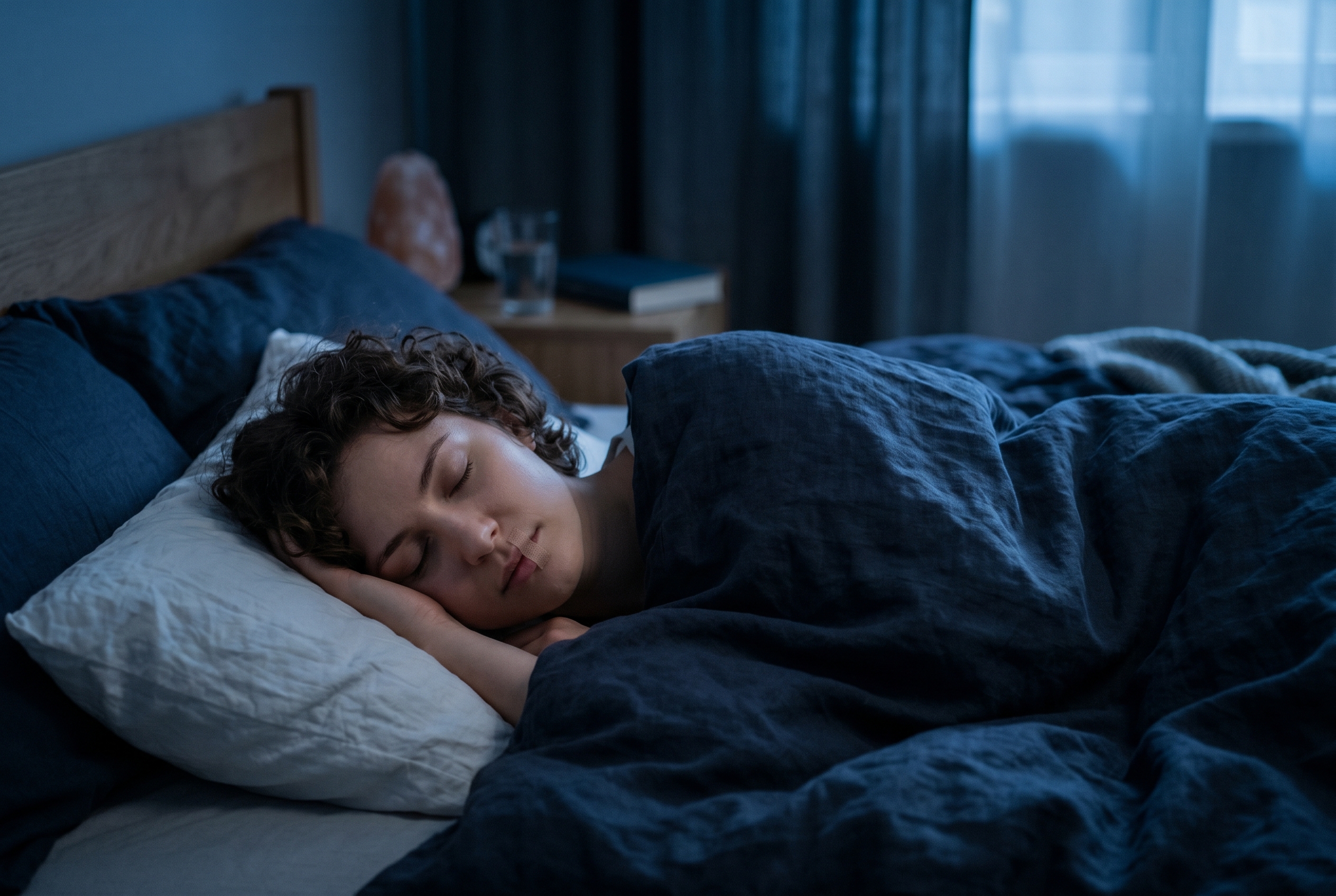
You spend a third of your life asleep, but the way you are breathing during those hours could be silently sabotaging your physical and mental recovery. If you consistently wake up with a mouth as dry as sandpaper, a persistent morning sore throat, bad breath, or a lingering feeling of exhaustion despite logging eight solid hours in bed, you might be suffering from a widely ignored sleep disruptor: nighttime mouth breathing.
Enter mouth taping—a simple, somewhat strange-sounding practice that has recently taken the sleep optimization and biohacking worlds by storm. It involves exactly what it sounds like: placing a small, specially designed piece of tape over your lips before you go to sleep to force nasal breathing. But is this just another viral internet fad, or is there genuine, evidence-based science behind sticking a piece of adhesive over your mouth before bed?
The truth is, the human body was fundamentally designed to breathe through the nose. The mouth is an emergency backup system for respiration, meant to be used during intense physical exertion or when the nasal passages are completely blocked. Yet, an estimated 30 to 50 percent of modern adults breathe predominantly through their mouths while they sleep. This structural shift in how we take in oxygen has profound downstream effects on our sleep architecture, our nervous system, and our overall health. By intentionally sealing the lips, mouth taping aims to redirect airflow back to its rightful pathway, promising a host of benefits from reduced snoring to drastically improved deep sleep.
In this comprehensive guide, we are going to unpack the biological mechanics of nasal breathing versus mouth breathing, explore exactly how mouth taping impacts your sleep cycles, and provide a safe, step-by-step protocol for integrating this habit into your nightly routine.
The Physiology of Breathing: Nose vs. Mouth
To understand why mouth taping is so effective, we first need to look at the anatomy and physiological functions of the nasal cavity. The nose is not just two holes in your face; it is a highly complex, multi-stage filtration and climate control system for the air you breathe.
When you breathe through your nose, the air is forced through a labyrinth of turbinates—bony structures covered in a mucosal membrane. This pathway serves several critical functions. First, it acts as a primary filtration mechanism. The tiny hairs (cilia) and mucus in your nasal passages trap dust, allergens, bacteria, and viruses before they can reach your lungs.
Second, the nasal cavity regulates the temperature and humidity of the air. Regardless of whether the air outside is freezing cold or bone dry, by the time it reaches your lungs through the nasal pathway, it has been warmed to body temperature and humidified. This prevents the delicate lung tissues from becoming irritated.
However, the most magical and perhaps least understood benefit of nasal breathing happens in the paranasal sinuses. When air passes through the nasal cavity, it picks up a gas called nitric oxide (NO), which is produced continuously by the sinus cavities. Nitric oxide is a potent vasodilator. When this NO-rich air reaches the lungs, it opens up the blood vessels, allowing for significantly more efficient oxygen exchange. Studies have shown that nasal breathing can increase oxygen uptake in the blood by 10 to 20 percent compared to mouth breathing.
When you breathe through your mouth, you bypass this entire complex system. The air hits your lungs raw—cold, unfiltered, dry, and lacking the crucial nitric oxide needed for optimal blood oxygenation. This sets off a cascade of negative biological responses that can absolutely destroy the quality of your sleep.
The Hidden Dangers of Nighttime Mouth Breathing
Mouth breathing might seem harmless, but over time, it takes a massive toll on your body. The most immediate and noticeable effect is the evaporation of moisture. The oral cavity is not equipped to handle a continuous flow of air for eight hours. This leads to the classic "cottonmouth" feeling upon waking.
But a dry mouth is more than just uncomfortable. Saliva is your mouth's primary defense mechanism against harmful bacteria. It washes away food particles and neutralizes acids. When your mouth dries out, the pH balance plummets, creating an acidic environment where bacteria thrive. This is why chronic mouth breathers often struggle with morning halitosis (bad breath), an increased rate of dental cavities, and gum disease.
Beyond oral health, mouth breathing radically alters your nervous system's state. Breathing through the mouth typically involves shorter, shallower, and faster breaths into the upper chest. This pattern of breathing mimics hyperventilation and signals to the brain that the body is in a state of stress. It activates the sympathetic nervous system—the "fight or flight" response.
When your sympathetic nervous system is engaged during sleep, your body is flooded with low levels of cortisol and adrenaline. You remain hyper-vigilant. As a result, your brain struggles to transition into the deeper, restorative stages of sleep. Instead, you spend the night hovering in lighter sleep stages, making you highly susceptible to waking up from minor noises, temperature changes, or simply the discomfort of a dry throat.
Furthermore, mouth breathing is a primary anatomical culprit behind snoring. When the mouth is open, the jaw drops back and down, which can push the base of the tongue toward the back of the throat, narrowing the airway. As air is forced through this constricted space, the soft tissues vibrate, creating the sound of snoring. This not only disturbs your partner's sleep but also fragments your own sleep through continuous micro-arousals that you likely will not even remember in the morning.
Does Mouth Taping Actually Improve Deep Sleep?
So, how does taping your mouth shut translate to better, deeper sleep? The connection lies in the stabilization of your airway, the optimization of oxygen delivery, and the pacification of your nervous system.
Deep sleep—also known as slow-wave sleep or Stage 3 and 4 NREM sleep—is the phase of sleep where true physical restoration occurs. During this stage, your heart rate drops to its lowest point, blood pressure falls, breathing becomes extraordinarily slow and rhythmic, and the brain sweeps away metabolic waste. Human growth hormone (HGH) is released, repairing tissues, building muscle, and bolstering the immune system.
To stay in this delicate state of deep sleep, the brain requires an environment of complete safety and physiological stability. Nasal breathing provides exactly that. By taping your mouth, you force the slower, deeper, diaphragmatic breathing patterns associated with the nose. Diaphragmatic breathing stimulates the vagus nerve, which is the superhighway of the parasympathetic nervous system (the "rest and digest" state).
When the parasympathetic nervous system is dominant, your heart rate variability (HRV) increases—a key biometric indicator of physical recovery and sleep quality. Your brain registers that you are safe, allowing it to descend into the deepest levels of slow-wave sleep and stay there for longer, uninterrupted periods.
Additionally, because nasal breathing with nitric oxide increases oxygen saturation in the blood by up to 20 percent, your brain and organs are fully oxygenated throughout the night. You avoid the hypoxic (low oxygen) dips that often trigger the brain to pull you out of deep sleep. By eliminating the dry mouth that causes middle-of-the-night water breaks and keeping the jaw in a stable, closed position that minimizes airway collapse and snoring, mouth taping effectively removes the physical roadblocks that fragment your sleep cycles.
Struggling to stay asleep through the night? Mouth taping is just one powerful piece of the puzzle. If you want to stop waking up exhausted and finally fix your broken sleep architecture, discover the complete, step-by-step system to reset your circadian rhythm and drastically increase your deep sleep with our 7-Day Sleep Reset Protocol.
How to Start Mouth Taping: A Step-by-Step Guide
If you are ready to try mouth taping, it is crucial to do it correctly. This is not about using industrial adhesives or sealing your mouth completely shut in a panic-inducing way. The goal is to provide a gentle physical cue to keep your lips together.
Step 1: Choose the Right Tape Never use duct tape, masking tape, or standard household packing tape. These adhesives are too strong, will tear your skin, and do not allow the skin to breathe. You need a porous, hypoallergenic medical tape designed for human skin. A highly recommended, budget-friendly option is 3M Micropore Tape. It is inexpensive, tears easily, and leaves no residue. Alternatively, there are purpose-built sleep tapes on the market like SomniFix, which feature a small breathing vent in the center for psychological comfort and a specially formulated adhesive that releases painlessly.
Step 2: Prepare Your Sinuses You cannot tape your mouth if you cannot breathe through your nose. About an hour before bed, ensure your nasal passages are clear. If you have mild congestion, taking a hot shower, using a saline nasal spray, or employing a neti pot can help clear the airways. Using nasal dilator strips (like Breathe Right strips) in conjunction with mouth tape is an incredibly effective combination for maximizing nasal airflow.
Step 3: Prep Your Skin For the tape to stick properly and come off without irritation, your lips and the skin around your mouth should be clean and dry. Avoid applying thick night creams, heavy moisturizers, or lip balms immediately before applying the tape, as the oils will dissolve the adhesive. If you have a mustache or beard, purpose-built tapes with stronger (yet safe) adhesives might be necessary, or you may need to trim the hair directly around the lip border.
Step 4: Apply the Tape Fold your lips inward slightly so the delicate inner skin of your lips is not exposed to the adhesive. You do not need to apply a long horizontal strip across your entire mouth. For many beginners, a small vertical strip placed directly over the center of the lips is enough to keep the jaw closed while leaving the sides of the mouth open. This vertical method often feels much less claustrophobic and is a great way to acclimate to the sensation.
Step 5: Practice While Awake If the idea of taping your mouth makes you anxious, do not try it for the first time when you are getting into bed. Put the tape on for 20 to 30 minutes during the day while you are reading a book, watching television, or doing chores. This trains your brain to realize that you are perfectly safe and can breathe easily through your nose, eliminating any panic when it comes time to sleep.
Creating the Ultimate Sleep Environment for Deep Sleep
Mouth taping is an exceptional tool for optimizing your internal physiology, but it must be paired with an optimized external environment to truly unlock your deepest sleep. The physical surface you sleep on dictates your spinal alignment, which directly affects your airway and breathing mechanics.
If your mattress sags, your spine falls out of alignment, causing your neck to tilt at an unnatural angle. This can constrict the windpipe, making nasal breathing more difficult and negating the benefits of the tape. Upgrading to a highly supportive, customized bed like an Airpedic mattress allows you to adjust the firmness in the lumbar region, keeping your spine perfectly neutral and your airway wide open. If you sleep hot—which actively suppresses deep sleep—switching to a naturally cooling, responsive material from the Latex Mattress Factory can prevent the night sweats that force you to toss and turn.
Furthermore, wearing adhesive on your face every night requires a bit of care for your skin. Tossing and turning on rough cotton pillowcases can catch the edges of the tape or irritate your facial skin. Upgrading to ultra-smooth Promeed silk pillowcases reduces friction against your face. Silk is naturally hypoallergenic, cool to the touch, and glide-resistant, ensuring that your mouth tape stays securely in place all night while protecting the delicate skin around your mouth from premature wrinkling and irritation.
Who Should NOT Tape Their Mouth?
While mouth taping is safe and beneficial for the vast majority of healthy adults, it is not for everyone. You should absolutely consult with a physician before trying mouth taping if you fall into any of the following categories:
1. Severe Obstructive Sleep Apnea (OSA): If you have been diagnosed with severe sleep apnea, mouth taping alone is not a cure and could potentially be dangerous if your airway collapses completely. It should only be used under the guidance of a sleep specialist, often in conjunction with a CPAP machine (where it can actually prevent air from leaking out of the mouth).
2. Chronic Nasal Obstructions: If you have severe a deviated septum, enlarged turbinates, nasal polyps, or chronic sinusitis that makes breathing through your nose physically impossible, taping your mouth will simply result in oxygen deprivation and panic. You must address the nasal obstruction with an ENT (Ear, Nose, and Throat doctor) first.
3. During Illness: Do not tape your mouth if you have a cold, the flu, a severe allergy flare-up, or any temporary sickness that is actively blocking your nasal passages with mucus.
4. Intoxication: If you have consumed heavy amounts of alcohol or have taken sedative medications before bed, your natural waking mechanisms and reflexes are severely blunted. It is unsafe to tape your mouth in an impaired state, as your body may not react appropriately if your nasal airway becomes compromised.
5. Young Children: Mouth taping should never be performed on infants or young children. If your child is a chronic mouth breather, this is a critical developmental issue that should be evaluated immediately by a pediatric dentist, orthodontist, or myofunctional therapist to correct jaw growth and airway development.
The Bottom Line
Mouth breathing is an evolutionary backup plan that has somehow become the modern default. By making the simple, inexpensive commitment to use mouth tape at night, you can retrain your body to breathe the way it was designed to. You will harness the vasodilating power of nitric oxide, significantly boost your blood oxygen levels, and shift your nervous system out of an anxious "fight or flight" state and into deep, restorative recovery.
It may feel a bit unnatural for the first few nights, and you might wake up to find you have instinctively pulled the tape off in your sleep. That is completely normal. Keep practicing. Within a week or two, the tape will stay on until morning, and you will likely experience a profound difference in your energy levels, mental clarity, and the deep, unbroken quality of your sleep.
Frequently Asked Questions
Is mouth taping dangerous?+
When done correctly using porous, medical-grade tape, mouth taping is generally safe for healthy adults. It should be avoided by those with severe sleep apnea, nasal obstructions, or while sick with congestion.
What kind of tape should I use for mouth taping?+
You should use a porous, hypoallergenic medical tape designed for human skin, such as 3M Micropore Tape, or specially designed sleep tapes like SomniFix. Never use household or duct tape.
Does mouth taping stop snoring?+
Yes, for many people. By keeping the mouth closed and the jaw stable, mouth taping prevents the tongue from falling back into the throat, which is a primary cause of airway constriction and snoring.
Can I tape my mouth if I have a blocked nose?+
No. You must be able to breathe freely through your nose. If you have temporary congestion from a cold or allergies, do not tape your mouth until your nasal passages are clear.
How long does it take to get used to mouth taping?+
It varies, but many people adjust within a few nights to a week. Practicing wearing the tape for 20-30 minutes during the day while awake can help train your brain to feel comfortable with it.
Keep Reading
Sleep Smarter Editorial Team
Our editorial team researches and writes evidence-based sleep content grounded in peer-reviewed science. All articles reference established sleep research from sources including the NIH, AASM, and Sleep Foundation.