Memory Foam vs Latex Mattress: Which Is Actually Better for Sleep?
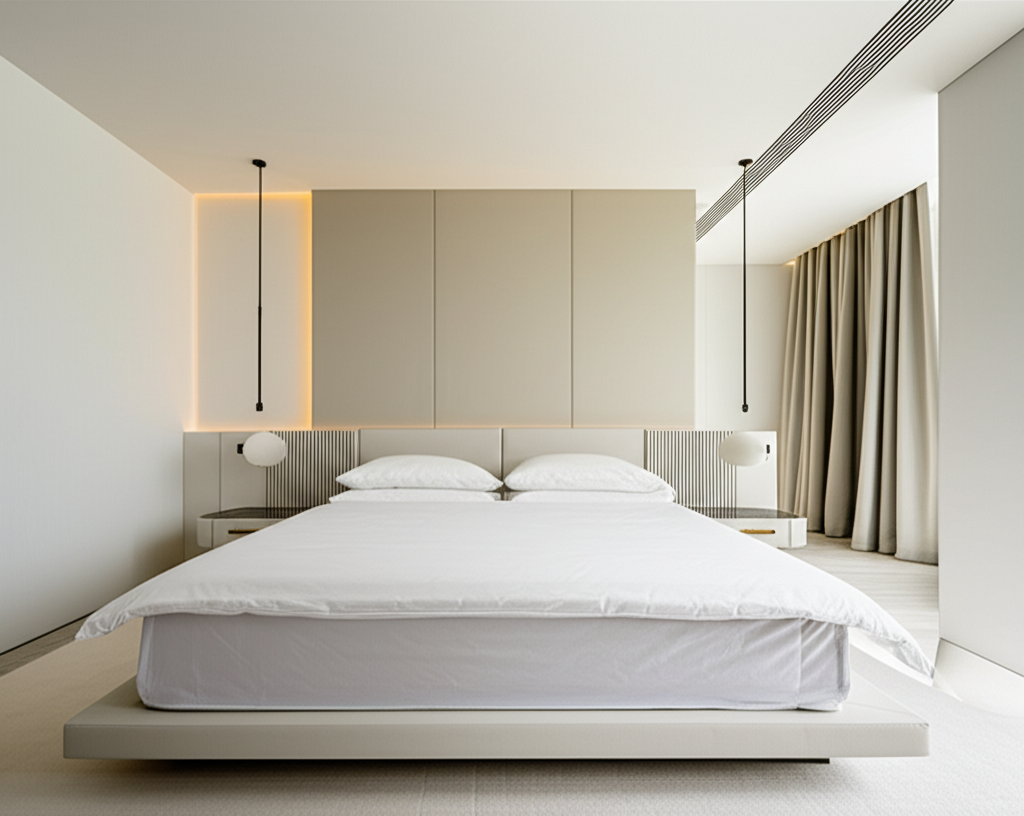
The Mattress Comparison Nobody Gets Right
Walk into any mattress store and you'll hear the same pitch: "It's all about personal preference."
That's a cop-out. There are real, measurable differences between memory foam and latex that matter for sleep quality, temperature, durability, and back support — and they affect different sleepers in different ways.
This isn't about which material is "better" in the abstract. It's about which one is better for how you sleep.
Here's the complete breakdown.
What Actually Separates Memory Foam and Latex
Before comparing, you need to understand what you're actually comparing.
Memory foam is a viscoelastic polyurethane material. It responds to heat and pressure — when you lie on it, it softens and molds to your body shape. When you get up, it slowly returns to its original shape. That slow return is the defining characteristic.
Latex is either natural (derived from rubber tree sap) or synthetic (petroleum-based). It's bouncy and responsive. When you press into it, it pushes back. When you move, it responds immediately.
These aren't cosmetic differences. They affect:
- How you sleep at night
- How hot you sleep
- How easy it is to move and reposition
- How long the mattress lasts
- What you pay
Let's go through each one.
1. Feel and Support
Memory foam: The "hugging" sensation. It contours precisely to your body — shoulders, hips, lumbar curve. This creates excellent pressure relief for side sleepers who have prominent contact points. The downside: some people feel "stuck" or like they're sleeping "in" the mattress rather than "on" it. Repositioning requires more effort because the foam doesn't spring back immediately.
Latex: The "lifted" sensation. It's supportive and responsive — it contours somewhat, but pushes back against you. You sleep "on" the mattress rather than "in" it. This makes repositioning effortless and gives a firmer, more active feel. Back and stomach sleepers often prefer this.
Winner by sleep position:
- Side sleepers → memory foam (deeper pressure relief)
- Back sleepers → latex or medium-firm memory foam
- Stomach sleepers → latex (firmer, prevents hip sinking)
- Combination sleepers → latex (easier to reposition)
2. Temperature and Sleep Heat
This is where memory foam has a well-documented weakness.
Traditional memory foam traps body heat. The viscoelastic material absorbs warmth from your body, and without airflow channels, that heat builds throughout the night. Hot sleepers consistently report higher core temperatures and more nighttime awakenings on traditional memory foam.
A 2019 study in Sleep Science found that sleepers on traditional memory foam had a mean skin temperature 1.8°F higher than on latex after 4 hours of sleep — enough to meaningfully disrupt thermoregulation and reduce deep sleep time.
Modern memory foam addresses this with gel infusions, copper infusions, and open-cell structures — but even the best gel memory foam runs warmer than natural latex.
Latex is inherently breathable. Natural latex has an open-cell structure and is often pin-core perforated, allowing significant airflow. Sleepers consistently report sleeping cooler on latex vs. memory foam.
Winner: Latex — not close, especially for hot sleepers.
3. Durability and Longevity
Memory foam: Quality varies enormously by density. Low-density memory foam (below 4 lb/cubic ft) develops body impressions within 2-4 years. High-density memory foam (5+ lb/cubic ft) can last 8-10 years. The problem: most mass-market memory foam mattresses don't disclose density, and cheap foam degrades faster than the warranty suggests.
Natural latex: The most durable mainstream mattress material. High-quality Dunlop latex routinely lasts 12-15+ years. Talalay latex (a more processed form) lasts 10-12 years. Both outlast memory foam at equivalent price points. Natural latex also resists dust mites and mold more effectively.
Winner: Natural latex — meaningfully longer lifespan.
4. Motion Isolation
Memory foam: Excellent. The viscoelastic material absorbs motion. If your partner moves, you don't feel it. This is memory foam's strongest selling point for couples.
Latex: Good, not excellent. It isolates motion better than innerspring, but the responsiveness that makes it easy to move also means some motion transfer. Natural Dunlop latex isolates motion better than Talalay.
Winner: Memory foam — especially if you or your partner moves a lot at night.
5. Off-Gassing and Chemical Exposure
New memory foam often off-gasses volatile organic compounds (VOCs) — the chemical smell you notice when unwrapping a new foam mattress. Most VOCs dissipate within a few days to weeks, and at typical levels they're considered low-risk by most health authorities. But for chemically sensitive sleepers, it's a real concern.
Natural latex has minimal off-gassing. OEKO-TEX and GOLS (Global Organic Latex Standard) certified latex has been tested for harmful substance limits. It's the safer choice for allergy-prone or chemically sensitive sleepers.
Winner: Natural latex — especially OEKO-TEX/GOLS certified options.
6. Price
Memory foam: Wide range. Budget options start at $300-600. Quality options (high-density, gel-infused) run $800-1,500. Premium options $1,500-2,500.
Natural latex: Expensive. Entry-level runs $1,200-1,800. Quality options $2,000-3,500. The price reflects the cost of natural rubber and more labor-intensive manufacturing.
Winner: Memory foam — significantly lower price at equivalent quality tiers. But factor in lifespan: a latex mattress at $2,500 that lasts 15 years costs less per year than a $1,200 memory foam mattress that lasts 8.
The Mattresses Worth Buying in Each Category
Best Latex Mattresses
Luxerion Dunlop Latex Mattress — Best Overall Latex
Dunlop latex is denser and more durable than Talalay — better long-term support, especially for back sleepers. The Luxerion uses natural Dunlop rubber with a medium-firm feel that suits most back and combination sleepers.
- Natural Dunlop latex, OEKO-TEX certified
- Medium-firm (6.5/10) — versatile for back and side sleepers
- Excellent edge support
- Minimal off-gassing
- Expected lifespan: 12-15 years
Luxerion Hybrid Latex Mattress — Best for Combination Sleepers
Combines a natural latex comfort layer with a pocketed coil support system. The coils add bounce and airflow; the latex adds pressure relief and responsiveness. Stronger edge support than an all-latex design.
- Natural latex over pocketed coils
- Medium feel (6/10) — the most adaptable option
- Best edge support in the LMF lineup
- Cooler than all-foam alternatives
- Great for couples with different sleep positions
Organic Latex Essential — Best for Chemical Sensitivity and Allergies
GOLS-certified organic latex with an organic cotton cover. If off-gassing, allergens, or synthetic materials are a concern, this is the cleanest option on the market.
- GOLS certified organic Dunlop latex
- Organic cotton cover (no synthetic fabrics)
- Hypoallergenic, dust mite resistant
- Medium feel (6/10)
- Suitable for sensitive skin and allergy sufferers
Talalay Latex Mattress Topper — Best Upgrade Without Replacing Your Mattress
If you're happy with your current mattress but want the benefits of latex, a Talalay topper is the most cost-effective option. Talalay latex is softer and more consistent than Dunlop — better for pressure relief and surface comfort.
- 2-3" Talalay latex layer
- Softer feel than Dunlop (better for side sleepers)
- Adds latex's temperature benefits to any existing mattress
- Dramatically extends mattress life
- Price: fraction of a full mattress replacement
Adjustable Base — Best Complement to Any Latex Mattress
A latex mattress on an adjustable base is one of the best sleep setups available. Elevating the head reduces snoring and acid reflux; elevating the feet reduces lower back pressure. Natural latex is flexible enough to work with adjustable bases (unlike some memory foams that crack under repeated flexion).
Best Memory Foam Option
Airpedic 700 — Best When You Need Adjustable Support
If you want the body-contouring benefits of foam but with more control than standard memory foam, the Airpedic 700 uses a zone-support system with adjustable lumbar firmness. Less heat-trapping than traditional foam (hybrid construction with coil base layer), better lumbar support for back sleepers.
- Hybrid: foam comfort layer + coil base
- Adjustable lumbar zone (3-10 firmness)
- Medium-firm (6.5/10)
- Better temperature regulation than all-foam designs
- 120-night trial
The Quick Decision Guide
Choose memory foam if:
- You sleep with a partner who moves a lot (motion isolation)
- You're a side sleeper who needs deep pressure relief
- Budget is a significant constraint
- You like the "hugging" feel
Choose latex if:
- You sleep hot (temperature regulation)
- You're a back or stomach sleeper
- You want a mattress to last 12-15 years
- You have allergies or chemical sensitivities
- You're a combination sleeper (easy repositioning)
- You prefer sleeping "on" vs. "in" your mattress
Frequently Asked Questions
Is memory foam or latex better for hot sleepers?+
Latex is significantly better for hot sleepers. It's naturally breathable and sleeps 1.8°F cooler than memory foam. If you sleep hot, latex is the clear choice.
Which lasts longer — memory foam or latex?+
Natural latex lasts 12-15 years on average, while high-quality memory foam lasts 8-10 years. Cheap memory foam degrades in 4-6 years. Latex wins clearly on lifespan and durability.
Should back sleepers use memory foam or latex?+
Back sleepers often prefer latex or medium-firm memory foam hybrids. Latex's firmness and responsiveness provide better spinal support than deep-contouring memory foam that can cause lumbar sinking.
Keep Reading
Sleep Smarter Editorial Team
Our editorial team researches and writes evidence-based sleep content grounded in peer-reviewed science. All articles reference established sleep research from sources including the NIH, AASM, and Sleep Foundation.